How a Major Fleet Management Tech Provider expanded their market with innovative FinTech solution


Table of contents
Customer
Major Fleet Management Tech Provider (FM)

FM was founded to modernize the traditional highly inefficient fleet management system. This allows their customers to not only increase productivity, but also gain significant operational safety, efficiency, and profitability.
With over 100,000 customers and growing, FM is aiming to provide their innovative solutions to smaller logistics companies.
The Challenge
While FM has a team of experts who can help their larger customers obtain financing, this is not easily doable for smaller logistics companies.
Traditional financing options via banks are often not easily available for small businesses. Even if they are, the process for getting financing can take weeks or even months. Hampering both the small businesses need to grow and FM’s ability to serve them.
The other option that FM could employ is to provide financing to these small businesses out of their balance sheet. However, this might not be the best use of their capital as the funds can be allocated for other critical business initiatives.
It seems FM’s strategy to help more small businesses may falter before it gets a chance to go into the mainstream.
The Solution
FM’s finance team was eager to find a solution that could help them grow into this market segment. In its quest to find a payment solution that could balance customer flexibility with the FM’s upfront capital needs.
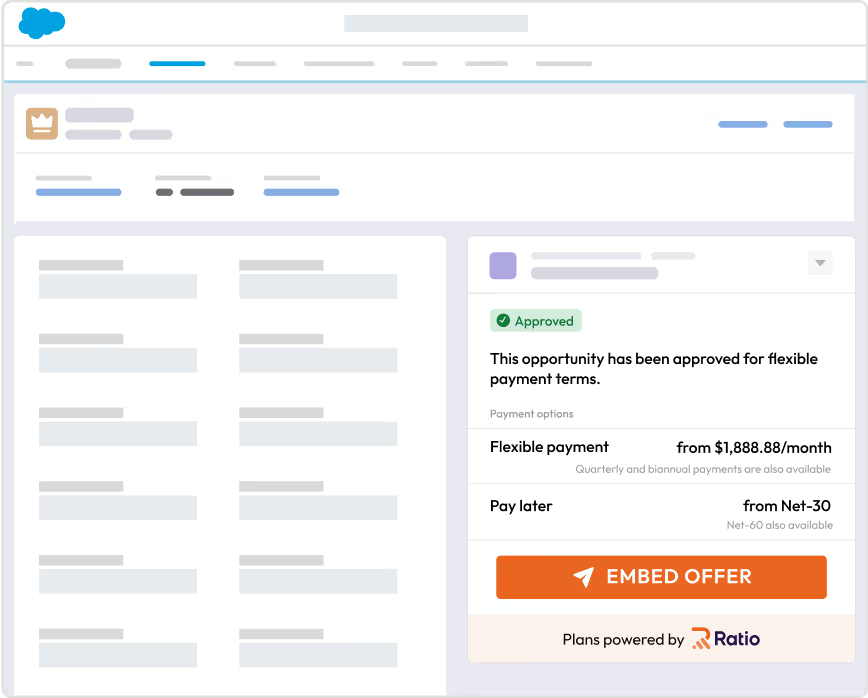
Thanks to Ratio’s seamless onboarding and dedicated support, integrating Ratio Boost into FM’s operations was straightforward. The platform was smoothly integrated with FM’s CRM, requiring minimal disruption to the workflows of FM’s finance teams and sales representatives.
Moreover, Ratio Boost’s AI-driven underwriting process ensured that customers were evaluated for viability quickly and efficiently. If a customer didn’t meet approval criteria, FM’s sales team could promptly pivot to other financing options, reducing deal fallout and improving conversion rates.
The Results
Expanded Market Reach
Integrating Ratio Boost has significantly transformed FM’s operations, enabling them to penetrate the small business segment effectively. The flexible financing options made FM’s advanced fleet management technology accessible to smaller logistics companies, resulting in a notable increase in new customers.
Accelerated Sales Cycle
With the simplified financing process, the time from initial contact to closing a deal was reduced. Sales representatives could offer immediate financing solutions, improving deal velocity and conversion rates. This newfound efficiency allowed the sales team to engage with more clients and focus on building relationships rather than navigating complex financing hurdles.
Increased Revenue
The adoption of BNPL options led to an increase in sales within the target market, contributing to FM’s overall revenue growth. The company could now tap into a previously underserved market segment, diversifying its revenue streams and strengthening its market position.
Capital Preservation
By utilizing Ratio Boost, FM offered financing without tapping into their own balance sheet. This approach preserved their capital, enabling them to allocate resources to other strategic initiatives such as research and development, marketing, and expanding their team.