6 B2B Sales Enablement Tools You Did Not Know Existed (But Your Competitors Might)
This guide explains how B2B sales enablement is no longer just training and content. It’s any technology that removes friction between a prospect’s “yes” and cash in your account. It also explains why different B2B sales enablement tools matter and how to evaluate them for real revenue impact. It reviews 6 tools—Ratio Boost, Dock, Spekit, Aligned, Lavender, and GTM Buddy—each targeting a specific closing friction point, from outreach to close-to-cash, with a sales enablement strategy framework and key KPIs.


Table of contents

This guide explains how B2B sales enablement is no longer just training and content. It’s any technology that removes friction between a prospect’s “yes” and cash in your account. It also explains why different B2B sales enablement tools matter and how to evaluate them for real revenue impact. It reviews six tools—Ratio Boost, Dock, Spekit, Aligned, Lavender, and GTM Buddy—each targeting a specific closing friction point, from outreach to close-to-cash, with a sales enablement strategy framework and key KPIs.
🚨The Challenge: Revenue stalls when the close is fragmented across proposals, payments, and collections.
In most B2B companies, the close is broken, but not at the sales stage. It breaks after the yes, in the gap between commitment and cash.
Sales sends the proposal. Finance takes over billing. Legal reviews the terms. Operations manages collections. Momentum dies as the deal passes from team to team.
That fragmentation (not poor prospecting or weak training) is what’s quietly killing revenue. Yet when you search “B2B sales enablement tools,” you'll find the usual suspects: Salesforce, HubSpot, Gong, Outreach, and ZoomInfo.
Useful? Definitely. They are the backbone. But are they designed to eliminate closing friction? Not necessarily.
So instead of retreading that ground, we identified six B2B sales enablement tools that tackle real closing friction—from early outreach to the moment cash actually lands in your account.
You can jump straight to the tool list (it appears after the next three sections), but we recommend taking a moment to explore the context first.
What Counts As a B2B Sales Enablement Tool Today
Traditionally, sales enablement has meant coaching, training, content libraries, and technology that helps reps sell more effectively. That definition still holds. But in 2026, it’s incomplete.
Today, sales enablement is more about removing friction at the moment of close.
❓ If reps struggle to articulate value that’s Knowledge Friction.
📂 If they can’t find the right case study that’s Content Friction.
📅 If next steps are unclear that’s Process Friction.
💰 If buyers hesitate over payment terms that’s Financial Friction.
Each type of friction slows the path of a B2B buyer from interest to commitment. And modern B2B sales enablement tools must address all of them. It is any technology that reduces friction between a lead and cash hitting your bank account (like Ratio).
That’s the benchmark. Next, here’s how to choose tools that actually meet it.
How to Choose B2B Sales Enablement Tools
Every tool on your shortlist should pass a baseline inspection. If it fails here, it will create more friction than it removes.
🎯 Define Specific Goals: Don’t buy generic “sales enablement.” Define the exact bottleneck you’re solving for. Otherwise, new software just layers on top of existing inefficiencies.
🔗 Check Deep Integrations: If it doesn’t sync two-way with Salesforce or HubSpot, it creates silos. And silos create handoffs. A true enablement tool should operate inside your workflow.
Prioritize Usability: If reps can’t pick it up in minutes, adoption stalls. Without adoption, enablement becomes shelfware. The best tools feel intuitive and reduce cognitive load.
🔒 Verify Security: Security should never become a late-stage obstacle. SOC 2 compliance, GDPR adherence, and enterprise-grade controls are baseline requirements.
📈 Assess Scalability: What works for ten users must work for one hundred. The tool must grow with your revenue.
🤝 Evaluate Support: Look for structured onboarding and ongoing partnership. A login and a help center are not enough.
These are the baseline standards.
But even if it passes this inspection, one critical question remains: Will it actually move revenue?
How to Select a Sales Enablement Platform for Maximum Revenue Impact
Most B2B sales enablement platforms promise efficiency. But only a few deliver on that promise with measurable impact on cash flow.
To identify the ones that do, apply these three “Trap vs. Fix” tests.
1️⃣ The “Workflow” Filter (Adoption)
The Trap: Buying a “Destination Tool.”
This is software that requires reps to stop what they’re doing, open a new tab, log in elsewhere, and learn a separate interface. The result? Reps bounce between screens. Context gets lost. Adoption drops.
The Fix: Prioritize In-Flow Tools.
Select platforms that live where your reps already work-inside your CRM, CPQ, or quoting environment–to drive adoption, reduce handoffs, and keep momentum intact.
2️⃣ The Buyer Experience Filter (External vs. Internal)
The Trap: Buying for Seller Management.
Legacy enablement tools focus on internal compliance. While this helps managers track activity, it doesn’t help the buyer say yes.
The Fix: Prioritize Buyer Enablement.
Modern buyers control the pace of the deal. The right tools reduce friction for them, not just for your team. Look for tools that accelerate the close.
3️⃣ The Hard ROI Filter (Cash vs. Clicks)
The Trap: Settling for Soft ROI.
Many tools justify their cost with metrics like:
- Time saved searching for files
- Number of content views
- Call coaching scores
These are operational metrics. However, they’re difficult to defend in front of a CFO.
The Fix: Demand Hard Revenue Impact.
Choose tools tied directly to win rates, closing velocity, and cash acceleration. If a tool cannot demonstrate a measurable impact on deal progression or cash timing, it’s overhead.
Now let’s look at the B2B sales enablement tools that actually pass these tests.
6 B2B Sales Enablement Tools to Maximize the Impact on Revenue
Rather than being a single category, sales enablement is a series of leverage points across the revenue journey. The six tools below were selected because they target a specific revenue bottleneck.
Here are the six B2B sales enablement tools for 2026:
- Ratio Boost: The Closing Motion Platform
- Dock: Digital Sales Rooms for Buyer Alignment
- Spekit: Just-in-Time Enablement Inside Your Workflow
- Aligned: Mutual Action Plans That Enforce Accountability
- Lavender: AI Email Coaching for Higher Reply Rates
- GTM Buddy: Contextual Content Intelligence for Sales
Let’s start with the platform that turns a buyer’s yes into cash upfront.
1. Ratio Boost - The Closing Motion Platform
You secured the verbal “yes” from your prospect. The deal is marked “Closed Won” in Salesforce. But the cash? Yet to arrive. Now you are stuck.
This is Financial Friction: the dangerous gap between commitment and payment. It’s where deals stall, payment terms reopen, and internal approvals drag.
The Problem:
Buyers say, “We don’t have the budget until next quarter,” or “We need to pay monthly.” Your CFO says, “We need the full contract value upfront.”
That mismatch slowly kills closing momentum. To keep the deal alive, reps discount. Finance gets involved. Contracts are reworked. The close fractures across teams. And what should have been revenue turns into a delay.
The Secret Weapon:
Ratio Boost is a Closing Motion Platform designed to remove payment friction. It redefines close as cash upfront, not a signature.
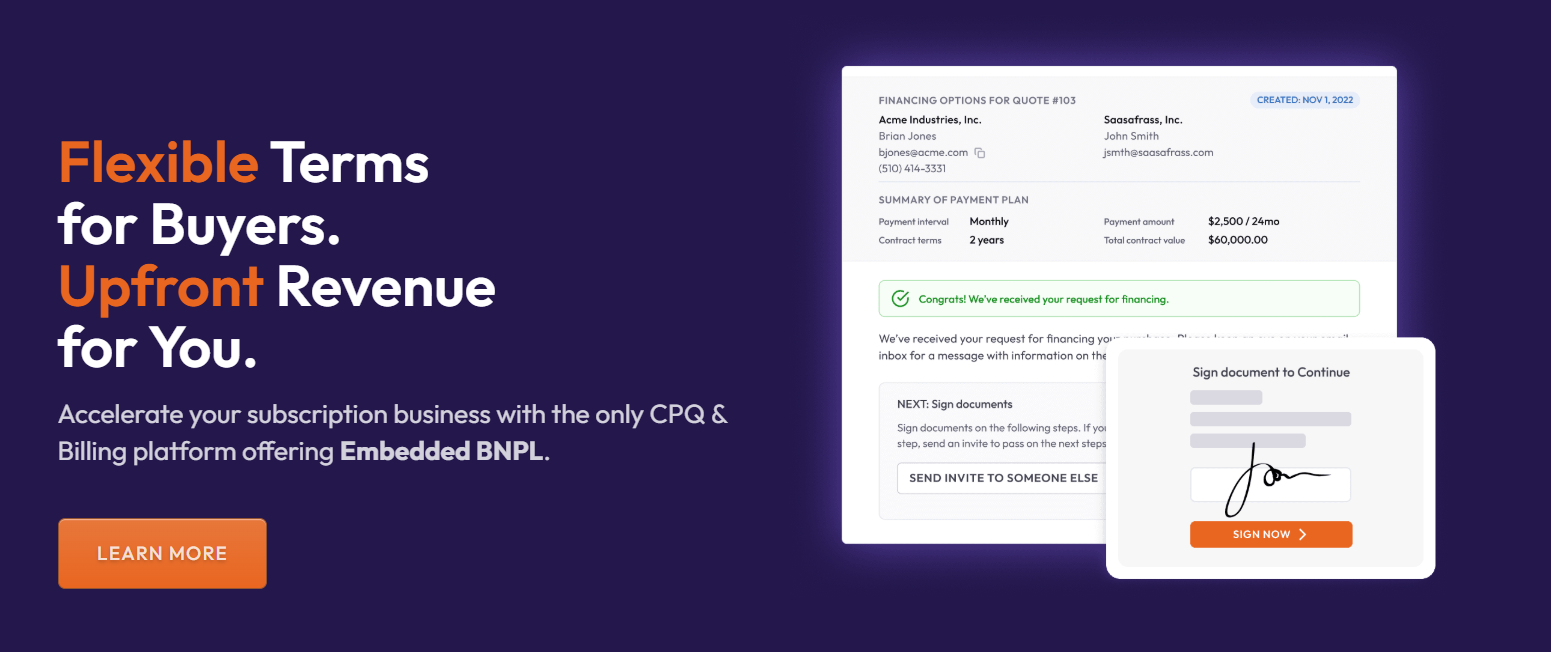
Instead of sending a proposal and handing payment off to finance, Ratio embeds flexible payment terms directly inside the quote.
Ratio starts with proposals, adds BNPL so buyers can pay over time while you get paid upfront, and keeps renewals and collections connected. This replaces fragmented handoffs with one continuous closing motion.
That’s why it qualifies not just as financing infrastructure, but as one of the most revenue-impacting B2B sales enablement tools available today
The Impact:
B2B healthtech company DearDoc embedded Ratio Boost directly into their proposals.
The result:
⏱️ Approvals dropped to 30-45 minutes
📈 Close rates jumped 20-30%
💰 Average selling price rose 25%
Here’s what the client has to say about us:
Ready to upgrade your sales enablement from activity tracking to cash acceleration?
👉 Book a free demo of Ratio Boost.
2. Dock - The Buyer’s Wikipedia
Modern buyers spend only 17% of their time talking to sales. They spend most of their time aligning internally. That creates Buying Friction.
The Problem:
A typical deal thread: five emails, seven attachments, three versions of the proposal. Your champion is left digging through inboxes to prepare for their internal meeting.
The Secret Weapon:
Dock approaches sales enablement from the buyer’s side. Instead of sending scattered files, reps create a Digital Sales Room, a single, branded microsite for the deal.
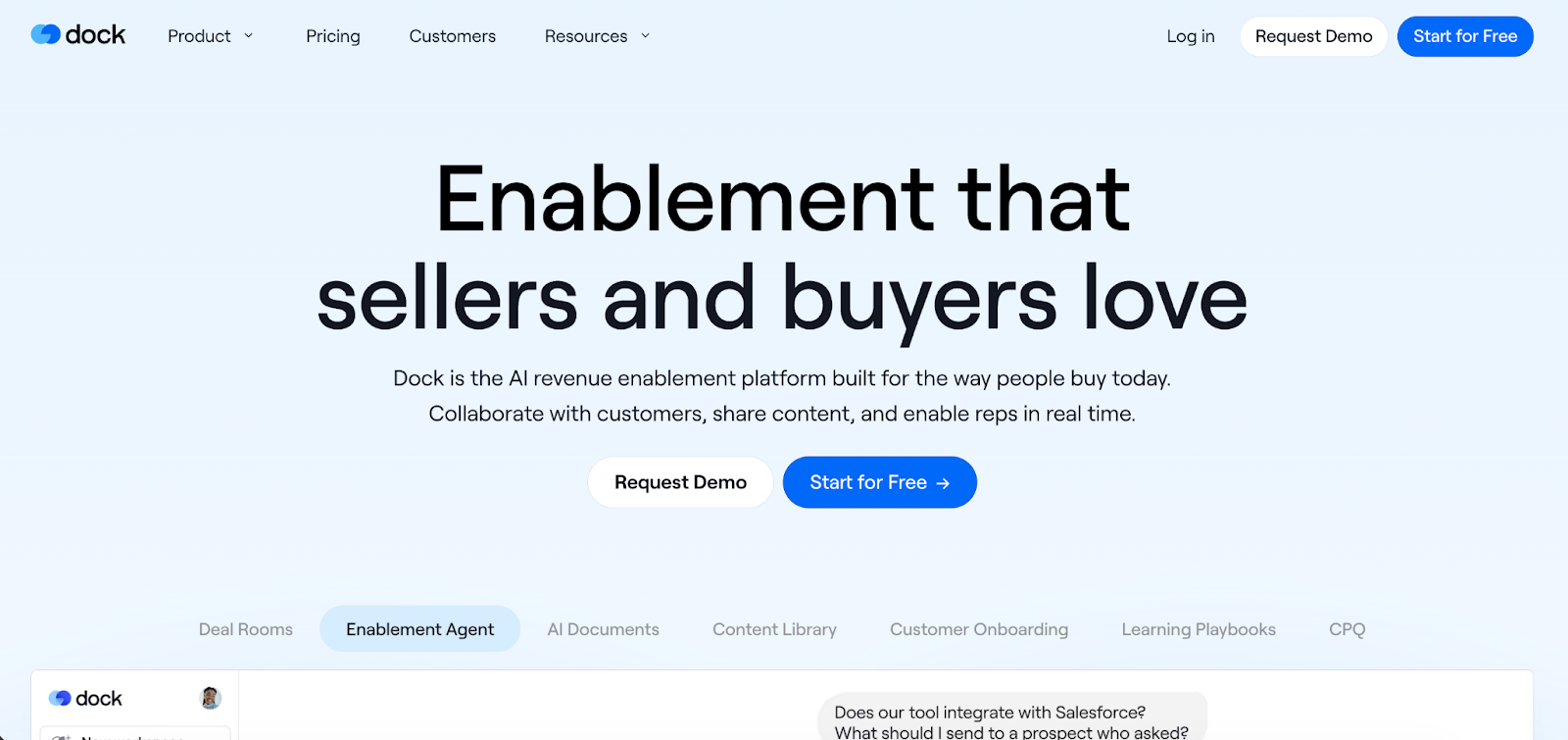
Inside one link, you can centralize the mutual action plan, pitch decks, case studies, security documents, contracts, and next steps.
The Impact:
Lattice saw a 25% increase in win rates after implementing Dock’s Digital Sales Rooms.
Dock strengthens buyer alignment and reduces internal confusion. And in complex B2B sales cycles, that clarity can make the difference between stalled momentum and forward progress.
3. Spekit - The “Just-in-Time” Tool
Traditional sales training doesn’t stick. By the time reps return to their workflows, they forget most of what they learned.
That creates Knowledge Friction. Not because teams lack content. But because knowledge isn’t delivered when it’s needed.
The Problem:
Sales reps often struggle with change management and information overload.
- Content decays quickly.
- Updates pile up.
- Answers live in different places.
Reps spend too much time searching for information and not enough time selling. Traditional training expects reps to learn and memorize content separately from their daily tools.
But that separation creates friction.
The Secret Weapon:
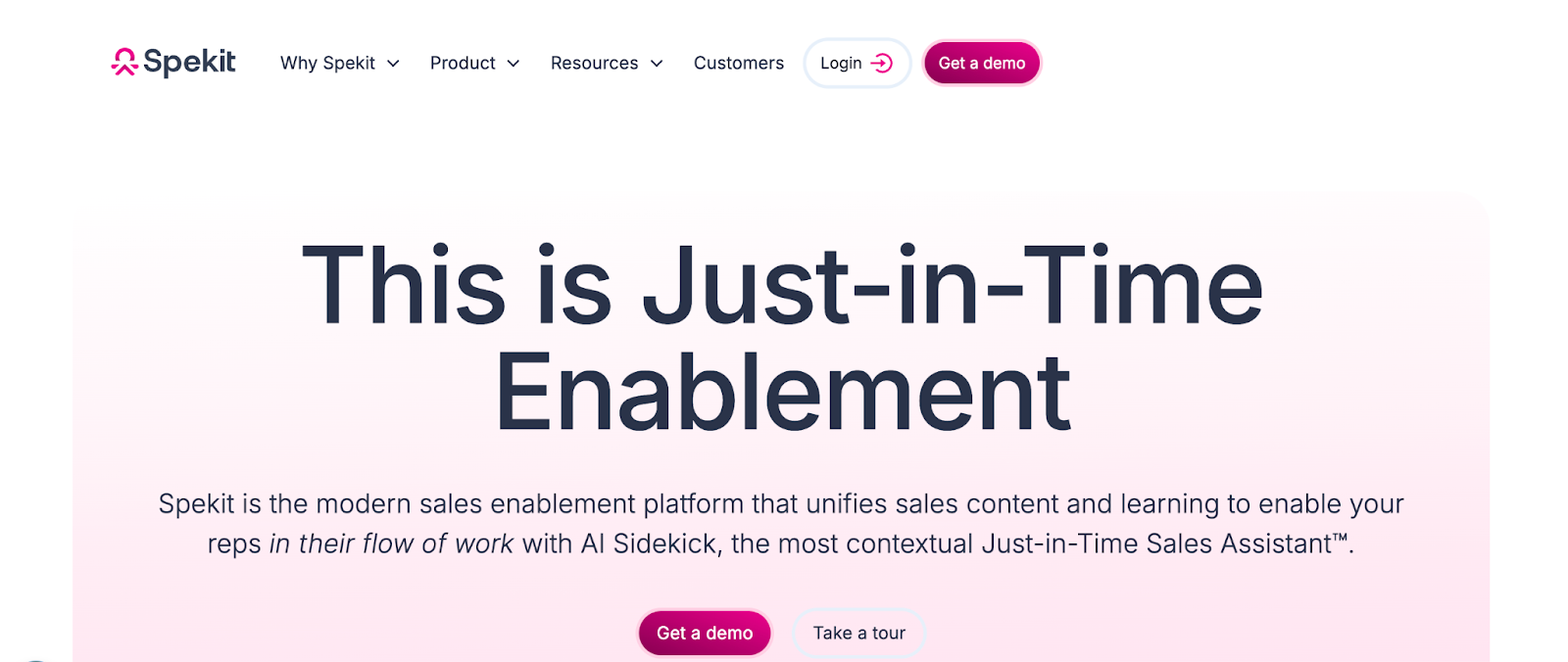
Spekit fixes this by overlaying just-in-time guidance directly inside the tools reps already use, surfacing in-app spotlights, embedded videos, and tooltip prompts at the exact moment they’re needed.
The Impact:
At ZoomInfo, using Spekit to deliver process updates led to a 3X increase in engagement on key process changes and 1,100 correctly dispositioned opportunities in one month.
Spekit strengthens enablement by ensuring knowledge is applied. In fast-moving B2B sales environments, that consistency can materially improve execution quality and pipeline efficiency.
4. Aligned - The “Mutual Action” Enforcer
Deals rarely fail loudly. They stall quietly. The next steps are vague. Timelines are implied, not agreed. Internal approvals are “in progress.”
This is Accountability Friction. Not a lack of interest, but a lack of structure.
The Problem:
In complex B2B sales, multiple stakeholders are involved. If the buyer doesn’t have a clear roadmap for internal approvals, momentum slows. Champions struggle to coordinate internally, and reps are left guessing whether a deal is advancing or drifting.
The Secret Weapon:
Aligned focuses on Mutual Action Plans (MAPs). It creates a shared visual workspace where both seller and buyer can see and commit to every step required to close. Milestones, owners, deadlines, and engagement signals are all visible.
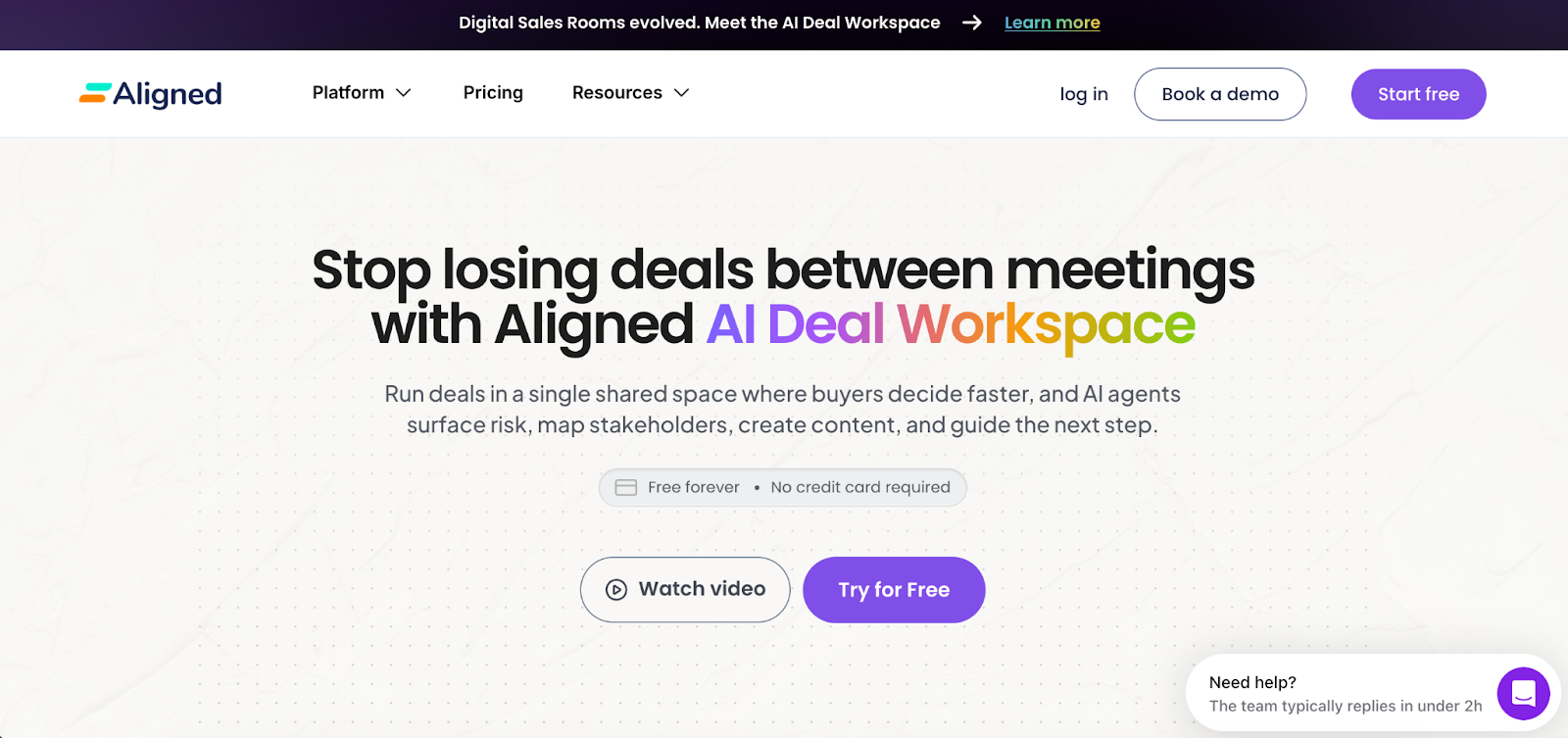
Champions can invite additional stakeholders directly into the workspace, turning email threads into structured collaboration. Aligned also surfaces engagement data into tools like Gong and Slack, giving reps visibility into who is interacting with content and when.
The Impact:
In under two years, Nuvo scaled revenue 20x, tripled prospect reach, and maintained a 97% retention rate, without adding headcount. Aligned strengthens sales enablement by enforcing clarity around next steps and making buyer commitment visible.
In enterprise sales cycles, that structure can significantly reduce silent stalls and improve deal predictability.
5. Lavender - The “Email Fixer.”
Outreach can often fail quietly. Not because reps don’t send emails, but because their communication doesn’t match modern buying behavior.
This is Outreach Friction. When emails are ignored, the pipeline never starts.
The Problem:
Reps often spend 10-15 minutes crafting a single cold email. They often over-explain, lead with “I” instead of “you,” and write for a desktop.
The result? Low reply rates. Domain reputation risk. Pipeline leakage before the first meeting.
The Secret Weapon:
Lavender acts as a real-time AI email coach. It analyzes emails to score drafts instantly, offering data-driven suggestions on tone and personalization, “I/You” balance, clarity, and length, and much more. Instead of waiting for post-mortem coaching, reps receive guidance before they hit send.
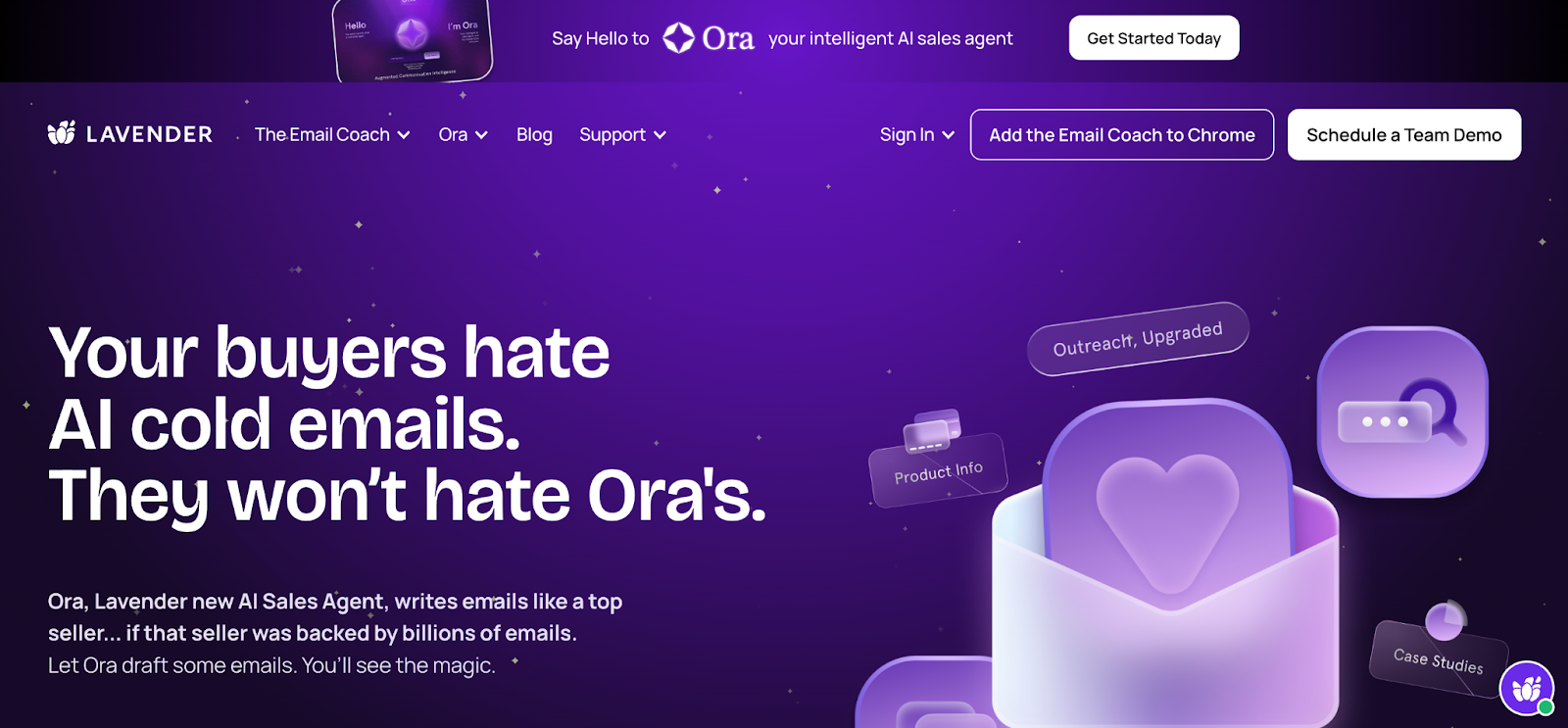
Lavender also integrates directly with tools like HubSpot, Salesloft, and Gmail, allowing enablement to happen inside the workflow.
The Impact:
Growth Culture used Lavender’s Ora AI layer to activate 250 targeted healthcare clinicians and generate $2.7M in pipeline within 8 weeks.
Lavender strengthens sales enablement at the top of the funnel by improving message quality, scaling personalization, and increasing pipeline efficiency. When outreach improves, everything downstream becomes easier.
6. GTM Buddy - The “Contextual Content” Surfer
Marketing creates valuable assets. But when reps need them most, they can’t find them.
This is Context Friction. The content exists, but it’s buried in folders, drives, or platforms that require too many clicks.
The Problem:
Sales conversations move fast. If a rep has to open another tab, search a library, or message marketing for the right asset, momentum drops. Even worse, content usage becomes inconsistent.
The Secret Weapon:
GTM Buddy approaches enablement through content intelligence inside the workflow. Instead of acting as a static repository, it auto-indexes internal and web content and surfaces relevant assets directly where reps work in email, calendar, CRM, and Slack.
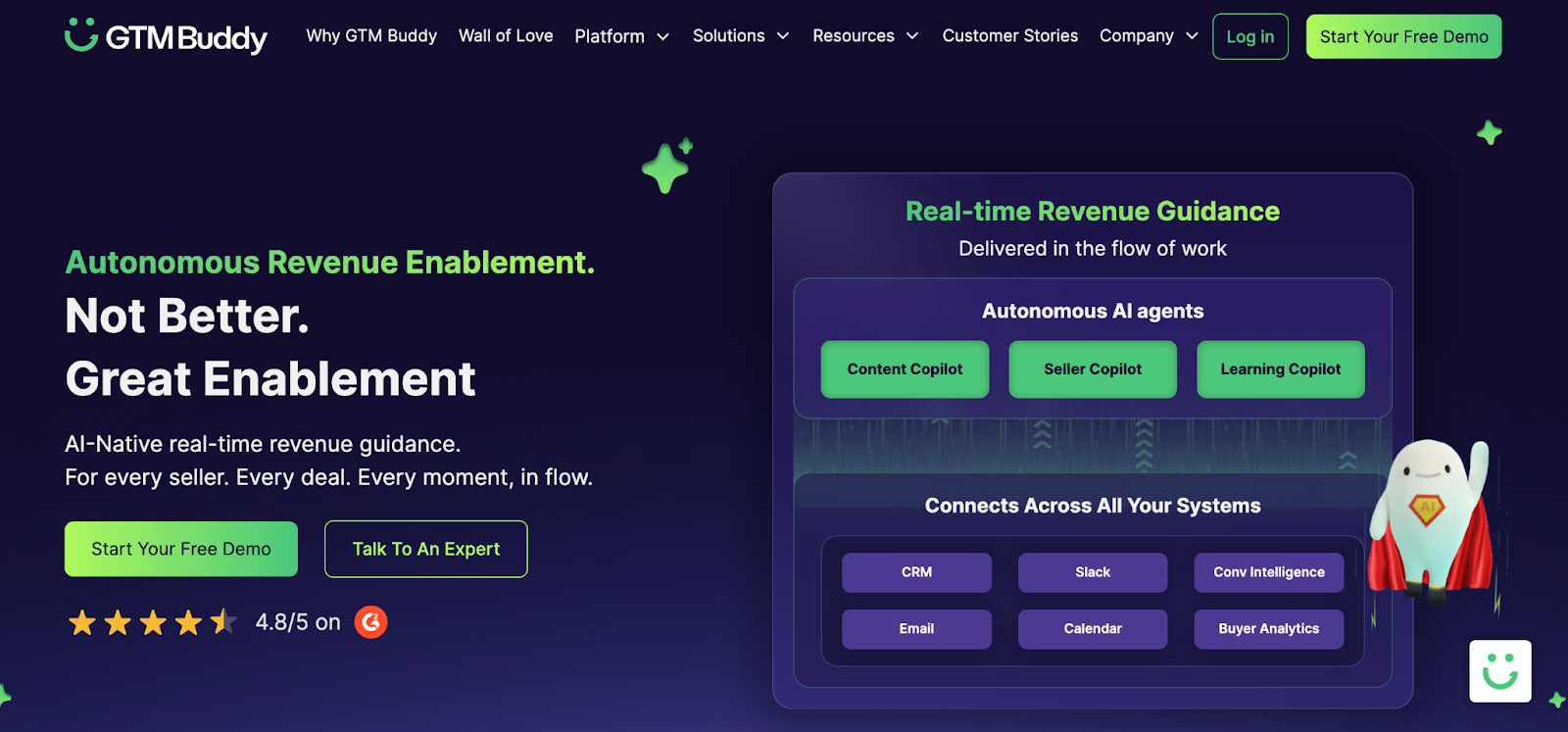
If you’re preparing for a prospect, it can automatically suggest:
- The relevant case study
- A stage-specific deck
- A competitor comparison
- A blog post addressing a common objection
Its AI copilot, Ask Buddy, provides on-demand assistance, whether that’s finding content, drafting a follow-up, or answering a product question.
The Impact:
After implementing GTM Buddy, LeanData witnessed an increase in platform adoption within the first month and significant time savings through seamless in-workflow enablement.
GTM Buddy strengthens sales enablement by ensuring every rep has access to the most relevant content at the moment it matters. When context improves, conversations improve.
What Are Some Best Practices for B2B Sales Enablement From Proven Sales Thinkers
The best sales enablement strategies are rooted in how buying decisions actually happen and where revenue actually stalls. Here’s how proven sales thinkers approach enablement.
Ari Galper: Enable Discovery, Not Pitching
Galper argues that Reps need questioning frameworks that help buyers articulate real problems, not polished scripts. Enablement should provide structured discovery prompts and objection navigation guides. Clarity at the beginning reduces friction at the close.
Key Takeaway: Equip reps to uncover problems, not just present solutions.
John McMahon: Align to the Buying Process
In his book, The Qualified Sales Leader, McMahon argues that deals are won by understanding how decisions are made inside complex organizations. His approach focuses on structuring the sales process around how buyers actually reach a decision, not simply moving opportunities through generic pipeline stages.
Sales enablement should support stakeholder mapping, clear exit criteria, and defined decision processes that mirror the work buyers must complete to move forward.
Key Takeaway: Enable reps to understand and navigate organizational complexity, and align your sales process to how buyers reach a decision.
Gong Labs: Deliver Enablement In-Flow
Gong’s research shows that learning sticks when delivered inside real work. In-workflow tools that surface prompts during live deals drive adoption far more effectively than traditional LMS platforms.
Key Takeaway: Deliver guidance where work happens, not where training happens.
Mark Roberge: Build Predictable, Data-Driven Revenue Systems
In The Sales Acceleration Formula, Roberge argues that sales should be treated as a science, not an art. He encouraged building data-driven, process-oriented systems that link hiring, training, demand generation, and management directly to measurable revenue performance.
Sales enablement, from this point of view, goes beyond content usage or tools. It centers around creating repeatable systems that improve win rates, accelerate deal velocity, and make revenue growth predictable. Here, technology and data become the foundation for scaling consistently.
Key Takeaway: Build measurable, process-driven sales systems that make revenue growth predictable.
Eliyahu Goldratt: Fix the Constraint
Goldratt’s Theory of Constraints teaches that progress comes from solving the single biggest bottleneck. Identify where revenue actually stalls—discovery, alignment, pricing, or close-to-cash—and remove that friction first.
Key Takeaway: Identify the friction that controls revenue flow and eliminate it first.
The pattern across all five thinkers is clear: B2B sales enablement works when it removes real friction, aligns with how buyers decide, and ties directly to revenue outcomes.
However, buyers’ behavior, AI capabilities, and revenue expectations are evolving quickly, and the tools that worked five years ago don’t always fit today’s environment.
So what’s changing?
What Are Some Not-to-Miss Trends in B2B Sales Enablement
Sales enablement is shifting from static support to intelligent, revenue-driven systems. And here are the trends shaping 2026:
💰The Rise of Closing Motion: Enablement is expanding beyond messaging and training into payment, financing, renewals, and collections, focusing on accelerating close-to-cash.
🤖 Generative AI for Personalization & Coaching: AI now creates tailored messaging, provides instant pitch feedback, and powers role-play simulations.
📂 Data-Driven Content Orchestration: Enablement is moving beyond storage. AI surfaces the right asset at the exact moment of need, reducing friction during live deals.
📊 Proactive Deal Intelligence: Modern tools analyze engagement signals and predict roadblocks, improving forecasting accuracy and deal prioritization.
🔄 Hybrid & Self-Service Selling: As buyers prefer rep-free research, sellers must support digital-first journeys with interactive, buyer-friendly experiences.
These trends signal a broader redefinition of sales enablement; one that extends into the close itself. And that’s exactly the space Ratio was built to address.
Why Choose Ratio “The Closing Motion Platform” for B2B Sales Enablement
Too many B2B scale-ups treat a signature as the finish line. But cash is what funds growth, and the gap between the two is where revenue quietly disappears.
That gap is exactly why B2B sales enablement itself has evolved. Forrester now defines the modern function not just as “sales enablement,” but as “revenue enablement,” reflecting its expanded role across all customer-facing teams to ensure alignment, execution, and realized revenue.
Enablement is no longer about helping reps secure signatures. It’s about making sure revenue actually lands. That’s where most systems break.
Ratio was built to eliminate that friction. It is the Closing Motion Platform that is introducing new scoreboards for modern enablement:
- Closing Velocity: Time from yes to cash upfront.
- Cash Acceleration: Percent of deals paid upfront.
- Handoff Reduction: Fewer teams between proposal and payment.
And the Outcome = Cash Certainty.
Ready to turn sales enablement into cash certainty? 👉 Book a free demo of Ratio and see how Closing Motion accelerates close-to-cash.
Disclaimer: All insights in this post are based on publicly available data, vendor websites, and user reviews as of our latest research. While we’ve prioritized accuracy and relevance for B2B SaaS decision-makers, we recommend validating features, pricing, and fit through vendor demos and tailored consultations before making a final selection.
FAQs
- Which are Some Popular B2B Sales Enablement Tools Across Different Categories?
B2B sales enablement tools span multiple categories, each designed to solve a specific friction point inside the revenue journey.
Below is a breakdown of common challenges, their corresponding tool categories, and widely used platforms within each:
| Problem Statement | Category of Tools | Popular Vendors |
|---|---|---|
| Reps can’t find the right case study or deck. | Content Management (CMS) | Highspot, Seismic, Showpad, DocSend, GTM Buddy, Guru, ClearSlide, Templafy, Attach, and PandaDoc. |
| My team is forgetting their training. | Learning Management System (LMS) | Mindtickle, SalesHood, Docebo, WorkRamp, Spekit, Allego, Brainshark, Membrain, Unboxed Advisor, and WhatFix. |
| We need to touch 1,000 leads without being robotic. | Sales Engagement & Outreach | Outreach, Salesloft, Reply.io, Apollo.io, Loom, Boomerang, and Cloze. |
| The champion can’t sell this internally. | Digital Sales Rooms (Buyer Enablement) | Dock and GetAccept. |
| We are flying blind on who to call. | Sales Intelligence & Data | LinkedIn Sales Navigator, Dealfront, Klue, Crayon, Clari, InsightSquared, and Tableau. |
| What actually happened on that call? | Conversation Intelligence (CI) | Gong, Chorus, and Dialpad. |
| Our data is a mess / No single source of truth. | CRM (The Foundation) | Salesforce, HubSpot, Salesmate, Proton CRM, and Zoho. |
| Niche problems (Field sales, Motivation, Financing). | Specialized & Performance | Spotio (Field Sales), Ratio (Financing), Ambition (Gamification), Hoopla, Vyond (Video), and Emissary. |
- How Do You Build an Effective B2B Sales Enablement Program?
Here’s a practical framework to build an effective B2B sales enablement program:
- Define Revenue Targets First: Set 2-3 measurable outcomes (e.g., increase win rate by 10%, reduce sales cycle by 15%, improve ramp time by 20%).
- Map the Buyer Journey: Identify key personas, decision-makers, and stage-specific objections. Build content and messaging that support each step.
- Audit and Simplify Your Stack: Remove redundant tools. Centralize content in one system that reps can access in seconds.
- Embed Continuous Coaching: Shift from quarterly training to manager-led, in-workflow reinforcement.
- Track and Iterate: Measure win rates, deal velocity, ramp time, and content influence. Review monthly. Fix what slows revenue.
Following these steps will help you build a sales enablement program as unique as your product.
- What Role Do AI Tools Play in B2B Sales Enablement Today?
AI in B2B sales enablement is shifting teams from manual execution to intelligent execution.
Its role spans five key areas:
- Content & Communication: Generates personalized emails, meeting recaps, and business cases at scale.
- Guided Selling & Next Best Action: Analyzes buyer signals and CRM data to recommend priorities, flag risk, and improve forecast accuracy.
- Just-In-Time Coaching: Real-time call guidance and in-workflow learning reinforce skills while reps are actively selling.
- Operational Efficiency: Automates admin tasks, surfaces insights across tools, and reduces toggle tax.
- Buyer Enablement: Powers digital sales rooms, self-service portals, and faster buyer alignment.
AI drives impact only when it drives performance, not just productivity.
- What KPIs Should B2B Sales Enablement Leaders Track Today?
Effective B2B sales enablement measurement goes beyond activity tracking. Leaders should monitor four categories of KPIs:
- Financial Outcomes: Closing Velocity, Cash Certainty, and Handoff Reduction between proposal and payment.
- Leading Indicators: Content usage, training completion, and whether reps apply frameworks in live deals.
- Lagging Indicators: Win rates, sales cycle length, ramp time, and quota attainment.
- Buyer & Efficiency Metrics: Stakeholder engagement with shared content and time spent searching for assets.
Prioritize KPIs tied to revenue progression, not activity reporting.
- Is There a Popular B2B Sales Enablement Strategy Framework?
Three dominant approaches shape modern B2B sales enablement strategy:
🧭 The Buyer Enablement Framework (Gartner): Shifts focus from helping sellers sell to helping buyers complete their internal decision process across six buying jobs.
🏗️ The Four Pillars Framework: Structures enablement around Content Management, Training & Coaching, Sales Intelligence, and Deal Management.
💰 The Closing Motion Framework (Ratio): Focuses on the moment of close, where commitment often breaks down due to fragmented handoffs. Ratio operationalizes this by starting with proposals, adding BNPL so buyers can pay over time while you get paid upfront, and keeping renewals and collections connected. This eliminates fragmented handoffs and accelerates close-to-cash.
Most teams combine all three.
↗
The Closing Motion Platform
Sellers on Ratio see up to 30% higher close rates and 25% higher ACV.


