Which Proposal Software Is Right for Your SaaS Team in 2026? Here Are 4 Worth Comparing
Most proposal tools speed up quotes but not the close. If your reps still chase approvals, discounts, or delayed payments, the software isn’t helping. This post compares four SaaS-ready platforms built to reduce friction, protect ACV, and turn quotes into cash. Ratio Boost leads with its embedded BNPL and instant seller payouts, so you close faster and collect sooner.


Table of contents

Most proposal tools speed up quotes but not the close. If your reps still chase approvals, discounts, or delayed payments, the software isn't helping. This post compares four SaaS-ready platforms built to reduce friction, protect ACV, and turn quotes into cash. Ratio Boost leads with its embedded BNPL and instant seller payouts, so you close faster and collect sooner.
The Challenge: You're evaluating proposal software, but the real friction isn't in formatting. It's in how deals slow down after the send.
Today's platforms prioritize polished templates, clean UX, and faster build time. But SaaS revenue doesn't break at the quote—it breaks in the handoffs: legal redlines, payment term reviews, approval chains, and missed timing. Too often, mid-market SaaS teams respond by giving 10-15% discounts or informal payment plans just to push deals through.
A 2025 Fortune Business Insights report found that only 36% of sales time is spent actually selling. The rest is lost managing these slowdowns, dragging out cash flow and eroding Annual Contract Value (ACV). And with many firms still relying on manual processes like spreadsheets and email approvals, the delays only compound.
So ask yourself: Do you want proposal software that just sends faster or one that helps you close with less friction, more control, and full-margin cash upfront?
This post compares 4 top proposal platforms. But first, let's unpack what actually matters when you are looking to choose.
What to Look for in Proposal Software (If You Actually Care About Revenue)
The proposal software market is growing fast, expected to double from $2.59B in 2023 to $5.81B by 2030. Yet SaaS teams in the $10M-$200M ARR range remain under-served. Enterprise CPQs drag out 12-month rollouts, while SMB tools collapse with usage-based pricing or multi-year deals.
The result? Sellers still patch quotes in spreadsheets, chase approvals over email, or give away double-digit discounts just to get cash upfront.
This checklist helps SaaS teams evaluate tools that actually accelerate revenue, not just send prettier proposals.
Let’s get into it:
1. Accelerated Time-to-Cash
Ask: Does the platform just send quotes, or help you get paid in record time.
Why it matters: “Sent” ≠ revenue. Top platforms embed flexible payment options or financing to eliminate cash delays.
2. Embedded Payment Flexibility Without Added Risk
Ask: Can you offer flexible terms (monthly, deferred) without slowing approvals or adding risk to Finance?
Why it matters: Buyers expect flexibility, but you can’t trade cash flow for closed-won. Financing should serve both sides.
3. Procurement-Ready Terms from Day One
Ask: Are payment terms and legal clauses embedded in the proposal, not tacked on post-signature?
Why it matters: If every quote leads to redlines or escalations, you’re not speeding anything up.
4. Real-Time Deal Structuring
Ask: Can reps adjust pricing, terms, or duration live based on buyer signals or credit profiles?
Why it matters: Rigid templates don’t win nuanced deals. Adaptability = win rate.
5. Automated Collections & Payment Follow-Up
Ask: Who owns the payment follow-ups and collections post-close: your AE or the platform?
Why it matters: Sales and Finance should focus on new revenue, not chasing old invoices.
6. Native Integration with Your GTM Stack
Ask: Does it plug into Salesforce, HubSpot, billing, accounting, and payment tools, without middleware or manual syncs?
Why it matters: Good software adapts to your stack. Great software activates it.
7. Unified Visibility Across Sales, Finance & RevOps
Ask: Can Sales, Finance, and RevOps all see deal status, payout timing, and payment risk from one place?
Why it matters: Silos = delays. Revenue ops need clarity to move deals forward and manage risk.
8. Enterprise-Ready Scalability
Ask: Can the platform support complex renewals, global entities, and longer deal cycles as you grow?
Why it matters: What works at $5M ARR often breaks at $50M+. You need a proposal system that scales with pricing models, team structures, and buyer sophistication.
By now, you know what actually matters when evaluating proposal software: cash acceleration, deal flexibility, and buyer-ready workflows. But not every platform delivers on those promises.
Let’s break down four that do.
Four Proposal Software That Help SaaS Teams Close Faster with Less Friction, More Cash
Not all proposal tools are built to move revenue. Some focus on formatting. Others stop at eSign. The best ones go further, helping you flex payment terms, shorten cash cycles, and close deals without redlines or delays.
Here are four proposal platforms built for the real needs of SaaS teams in 2026:
Ratio Boost: Proposal software with embedded financing and upfront payouts for sellers
PandaDoc: Clean, template-driven proposals with light payment features
Qwilr: Beautiful, interactive docs that enable pricing toggles and approvals
GetAccept: Buyer engagement + tracking layered onto traditional quoting tools
Let’s break down what each one does and which revenue problems they actually solve.
1. Ratio Boost: The Only Proposal Software That Helps SaaS Teams Close and Get Paid Upfront
While most proposal tools focus on design or automation, Ratio Boost transforms proposals into a revenue engine.
It combines dynamic deal building with embedded financing inside a full Quote-to-Cash (Q2C) system. Sales reps don’t just generate quotes, they send interactive proposals with pre-approved terms, real-time pricing adjustments, and flexible buyer payment options, all backed by instant financing.
Recommended Read: How CPQ with Embedded Financing Fuels SaaS Growth.
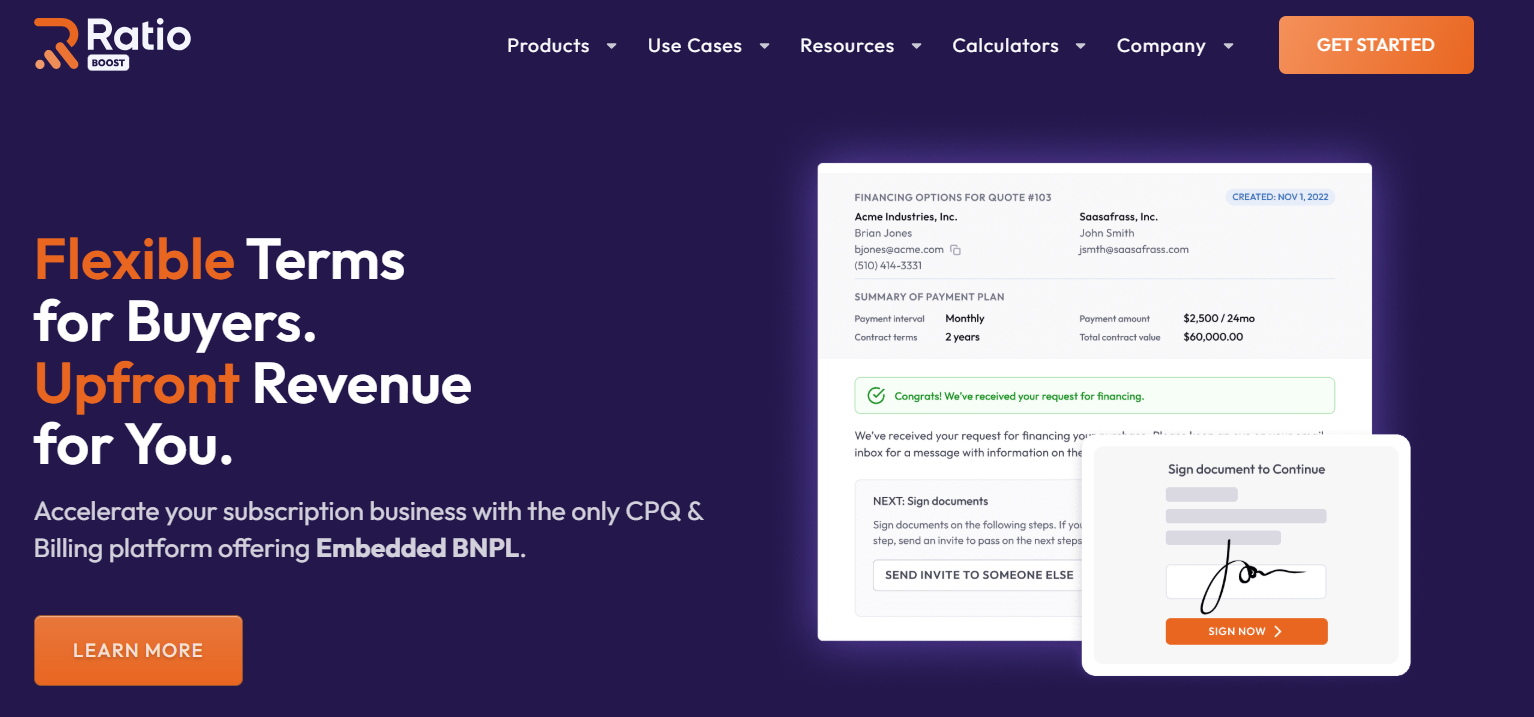
This not only removes delays tied to approvals and procurement but also ensures buyers can act immediate; without needing external funding or discounts.
The magic happens post-signature: Ratio Boost advances the full contract value upfront with its Cash-Advancing CPQ to sellers, even if buyers pay in monthly or deferred installments.
It’s more than quoting—it’s built to accelerate revenue without compromising cash flow. Collections, repayment risk, and payment operations are all offloaded, letting SaaS teams focus on growth instead of chasing invoices. For companies navigating complex pricing, upsells, or high-velocity deal flow, Ratio doesn’t just support the proposal—it closes the gap between pipeline and revenue.
Don't Miss Best CPQ Software for SaaS Companies.
Best For
SaaS teams in the $10M-$200M ARR range that need to close faster, reduce discounts, and protect cash flow with embedded BNPL.
Key Features of Ratio Boost as Proposal Software
- Smart Proposal Builder
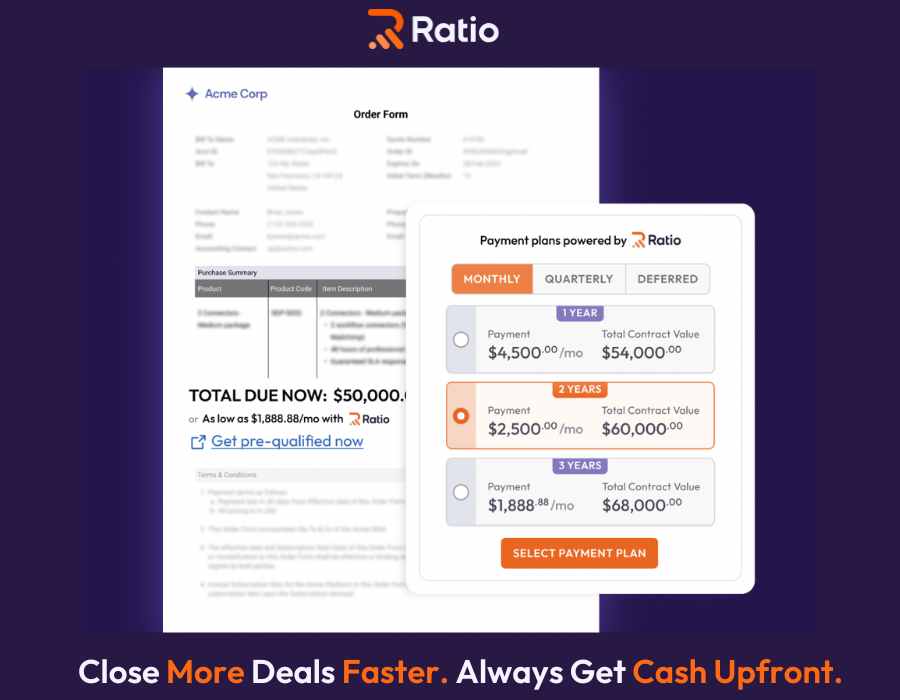
Create dynamic, buyer-facing proposals with flexible terms, pre-approved payment options, and embedded financing, no separate quoting or document tools needed. - Instant Q2C Execution
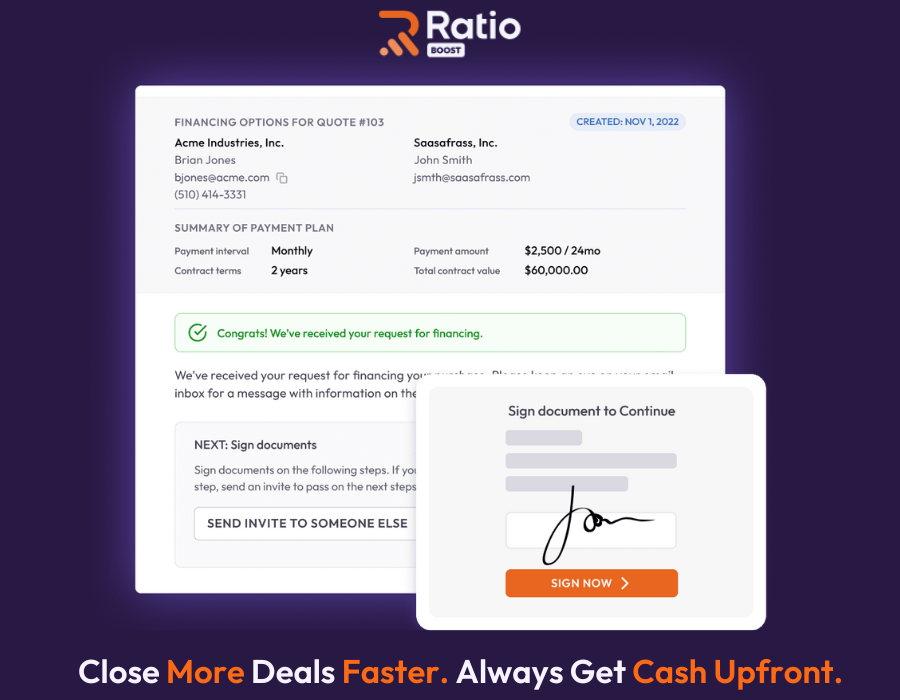
Turn proposals into revenue with one-click execution: buyers choose a plan, sign digitally, and get onboarded—while sellers get paid upfront. All inside your CRM or CPQ stack.
- Embedded BNPL & Financing
Buyers can pay monthly or defer payments, while Ratio pays you upfront. No third-party lenders, delays, or manual underwriting. Backed by a $400M+ capital pool.
- Real-Time Buyer Intelligence
Sales reps can track buyer actions inside the proposal (see when they open, pause, or drop off) enabling smarter follow-ups and deal rescue. - CRM + Billing Stack Integration
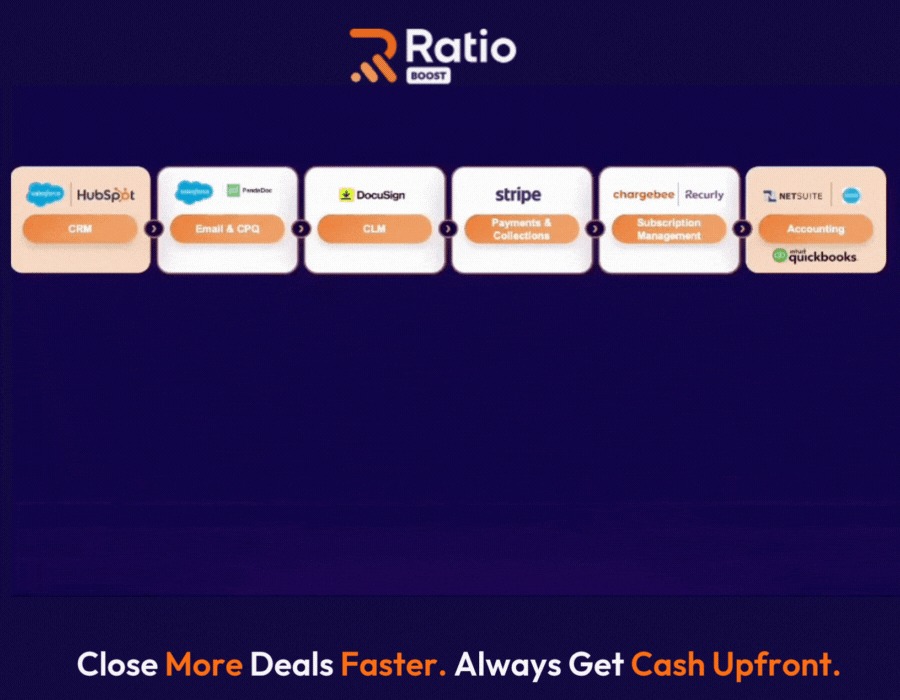
Works natively with Salesforce, HubSpot, Stripe, Chargebee, and NetSuite—no code or middleware required. Proposals and contracts sync automatically.
- Renewal & Upsell Flexibility
Add mid-term products or seats, extend contracts, or trigger renewals—directly from the original proposal flow. No re-quoting or new contracts needed. - Multi-Product Support (SaaS + Services + Hardware)
Quote and manage deals that include subscriptions, services, or even physical hardware—all in one unified system, without manual bundling or pricing logic.
Customer Success Stories of Ratio Boost as Proposal Software
DearDoc (HealthTech SaaS)
Challenge: Rigid upfront billing slowed sales cycles and lost deals.
Solution: Implemented Ratio Boost’s embedded BNPL to offer flexible payment terms without discounting.
Results:
- 25% increase in average deal size
- Sales cycle reduced to under 45 minutes
- 20-30% uplift in close rates
- Replaced multiple tools (Stripe, PandaDoc, DocuSign) with one streamlined platform
Key Limitations of Ratio Boost as Proposal Software
- Focused on SaaS and subscription models: Less suitable for organizations with highly complex hardware or engineering-driven product configurations, not a full manufacturing CPQ solution.
- Less ideal as a standalone tool: Ratio Boost shines when integrated across CRM, billing, and collections, but may feel limited in organizations without those systems or who prefer traditional standalone quoting workflows.
Pricing of Ratio Boost as Proposal Software
There’s no need for a new term or subscription cost to use Ratio Boost. Ratio earns a small margin from the financing cost covered by the buyer (or split, depending on your strategy).
Check here: Ratio Boost Fee.
Demo/Trial of Ratio Boost as Proposal Software
- Instant Demo Available – Book a live walkthrough to see proposals, financing, and deal flows in action.
- Sandbox Environment Available – For qualified teams who want to test integrations with Salesforce or Stripe.
2. PandaDoc – Best for Fast, Branded Proposal Creation with E-Signature
PandaDoc is a proposal software solution built to help SaaS and services teams create, send, and close proposals quickly.
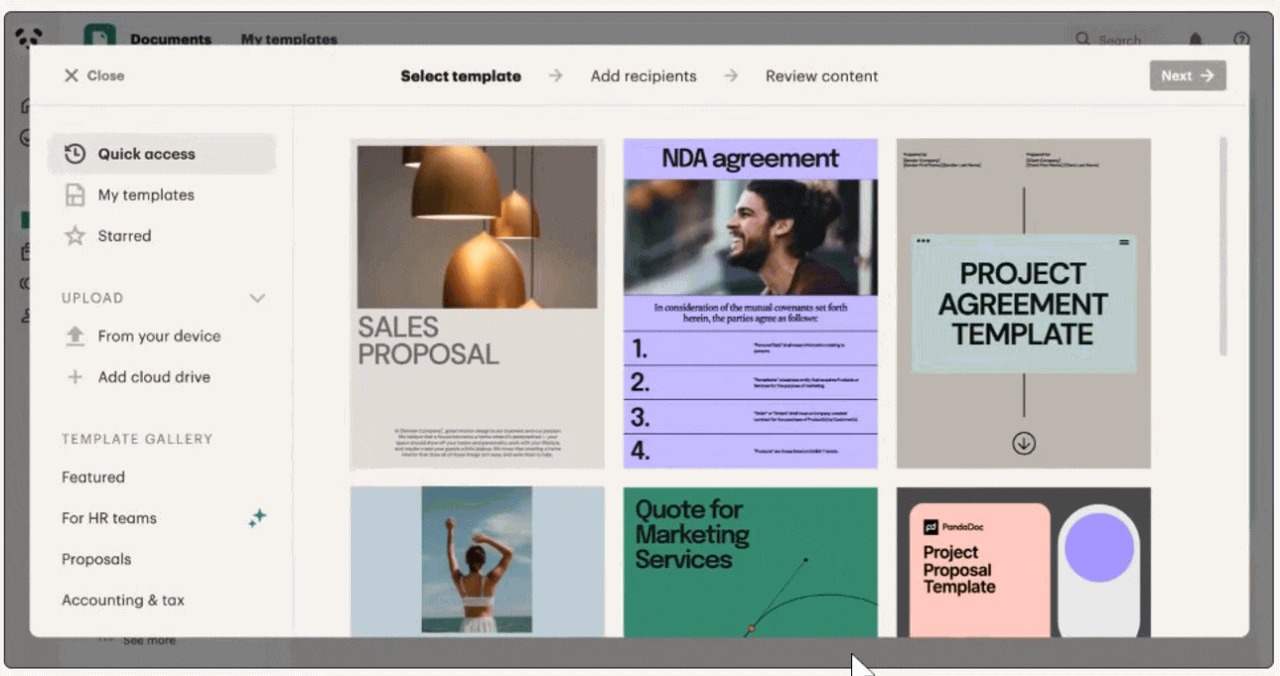
A strong emphasis is on design, collaboration, and buyer engagement. It’s especially well-suited for companies that prioritize speed, branding, and seamless e-signatures across their deal cycles. While it lacks embedded financing or Q2C functionality, it excels in automating document workflows, reducing admin, and improving visibility on buyer intent.
If your team’s biggest challenge is spending hours creating clean, professional proposals (not chasing down payments or restructuring deals mid-cycle), PandaDoc helps get proposals out the door fast, and keeps them moving.
Best For
SMB and lower mid-market teams that prioritize speed, branded proposals, and simple eSign workflows over complex revenue acceleration.
Key Features of PandaDoc as Proposal Software
- Drag-and-Drop Proposal Builder: Design polished, responsive proposals using a rich template gallery and branded content blocks.
- Legally Binding E-Signatures: Integrated, compliant eSign with full audit trails and SOC 2, HIPAA, and GDPR standards.
- Content Library & Smart Fields: Store reusable content blocks, automate document personalization with CRM-mapped fields.
- Real-Time Tracking & Notifications: See when buyers open, view, or comment on documents—trigger follow-ups instantly.
- Approval Workflows & Collaboration: Internal approval routing, commenting, and redlining make collaboration frictionless.
- CRM + CPQ Integration (Higher Plans): Connect directly to Salesforce, HubSpot, and more—pull in quotes and close deals faster.
Customer Success Stories of PandaDoc as Proposal Software
- HPC Technology Group: Saved 30 minutes per document and achieved a 20% jump in close rate.
- Crystal Ball (Workforce Management): Slashed proposal creation by 60%, improved quality, and eliminated error-prone handwritten notes.
- Grow: Reduced proposal time from 30 minutes to 5-10 minutes, improved brand consistency, and sped up renewals.
Key Limitations of PandaDoc as Proposal Software
- Not Built for Revenue Acceleration: Lacks embedded financing or cash-advancing Q2C capabilities, so doesn’t address post-quote cash flow bottlenecks like more advanced tools.
- Limited Pricing Intelligence: AI-driven risk-based deal structuring and dynamic terms aren’t available—pricing and terms must be static or manual.
- Template Overload: While powerful, the richness of templates and options can overwhelm users looking for simple workflows, especially smaller teams.
- Cost for Advanced Features: CRM integrations, deal rooms, CPQ, and automation are only available at higher-tier pricing.
Pricing of PandaDoc as Proposal Software
- Free eSign Plan: Sign up to 5 documents/month, basic signing—best for micro teams.
- Essentials ($19/user/month): Unlimited documents, template editor, analytics, 24/7 support.
- Business ($49/user/month): Adds CRM integrations, custom branding, content library, approval workflows, and deal rooms.
- Enterprise (Custom Pricing): Full CPQ, automation, SSO, API access, advanced security, and analytics.
Demo/Trial of PandaDoc as Proposal Software
- PandaDoc offers a 14-day trial to test the Business plan and explore advanced features.
- Live Demo is Available. You can request a personalized walkthrough or custom demo directly from their website.
3. Qwilr
Qwilr stands out in the proposal software market by replacing static PDFs with web-based, mobile-responsive proposal pages.
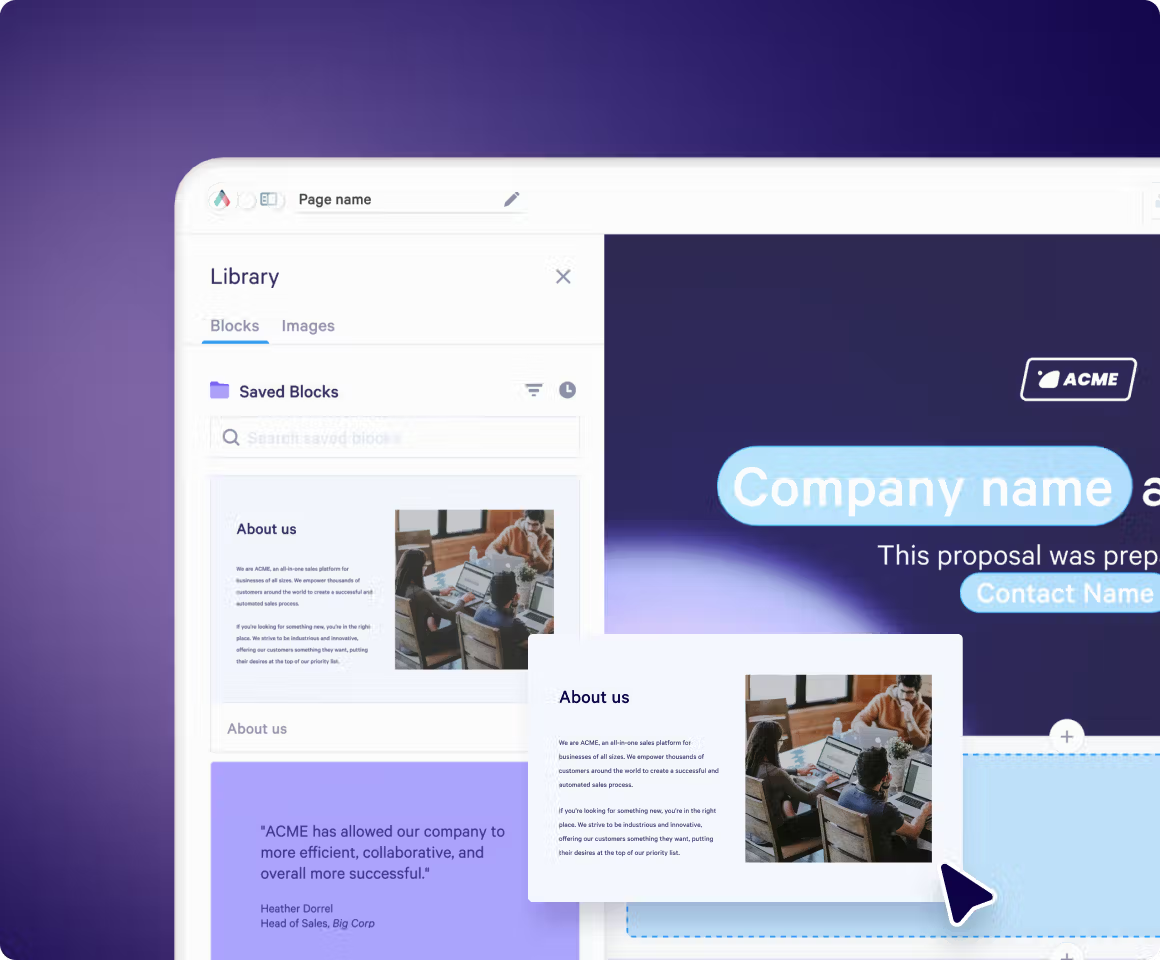
It’s purpose-built for SaaS teams that value design-forward experiences, interactive quoting, and real-time engagement tracking. With a strong emphasis on buyer experience and branded visuals, Qwilr turns every proposal into a mini website; while giving sellers control over pricing, upsells, and sign-off workflows.
While it doesn’t support embedded financing or quote-to-cash execution, Qwilr shines for teams that want high-conversion proposals with dynamic pricing blocks, embedded videos, and granular analytics.
Best For
Design-focused SaaS sales teams that want interactive, mobile-ready proposals with pricing toggles and strong buyer engagement.
Key Features of Qwilr as Proposal Software
- Web-Based Proposals: Replace clunky PDFs with beautiful, responsive proposal pages viewable on any device.
- Modular Content Blocks: Use reusable sections like pricing tables, testimonials, videos, and more to build proposals fast.
- Interactive Pricing Tables: Buyers can toggle between tiers, add-ons, or term lengths—quote customization made self-serve.
- Real-Time Buyer Analytics: Get alerts when buyers open, scroll, or engage—see which parts drive the most interest.
- Built-in E-Signatures: Close deals natively without switching tools or adding extra steps.
- CRM + Workflow Integrations: Works with HubSpot, Salesforce, Slack, and Zapier for deal automation.
Customer Success Stories of Qwilr as Proposal Software
- TSL Marketing (Advertising Services): Integrated Qwilr with HubSpot to reduce proposal creation time and maintain brand consistency across content.
- Destined (Enterprise Service Provider): Improved operational efficiency by reducing document production time by 50%.
Key Limitations of Qwilr as Proposal Software
- No Embedded Financing / Quote-to-Cash: Qwilr doesn’t support buyer credit evaluations, payout acceleration, or BNPL; so it cannot reduce cash delays post-signature.
- Lacks Smart Pricing: No real-time underwriting, AI-based pricing adjustments, or contract-based payment plan structuring.
- Limited Automation: Workflow approvals and complex permissions are rudimentary—fine for SMBs but a blocker at scale.
- Design-Heavy vs. Ops-Heavy: Its strength is in external design polish, not internal deal acceleration.
Pricing of Qwilr as Proposal Software
- Business ($35/user/month): Proposals, analytics, CRM integrations, and e-signatures
- Enterprise (Custom Pricing): SSO, premium support, content permissions, audit logs
(Annual plans available with volume discounts)
Demo/Trial of Qwilr as Proposal Software
Both free trial and live demo is available. You get a 14-day free trial with full access to business plan features.
4. GetAccept
GetAccept elevates the proposal experience by transforming static documents into interactive digital sales rooms.
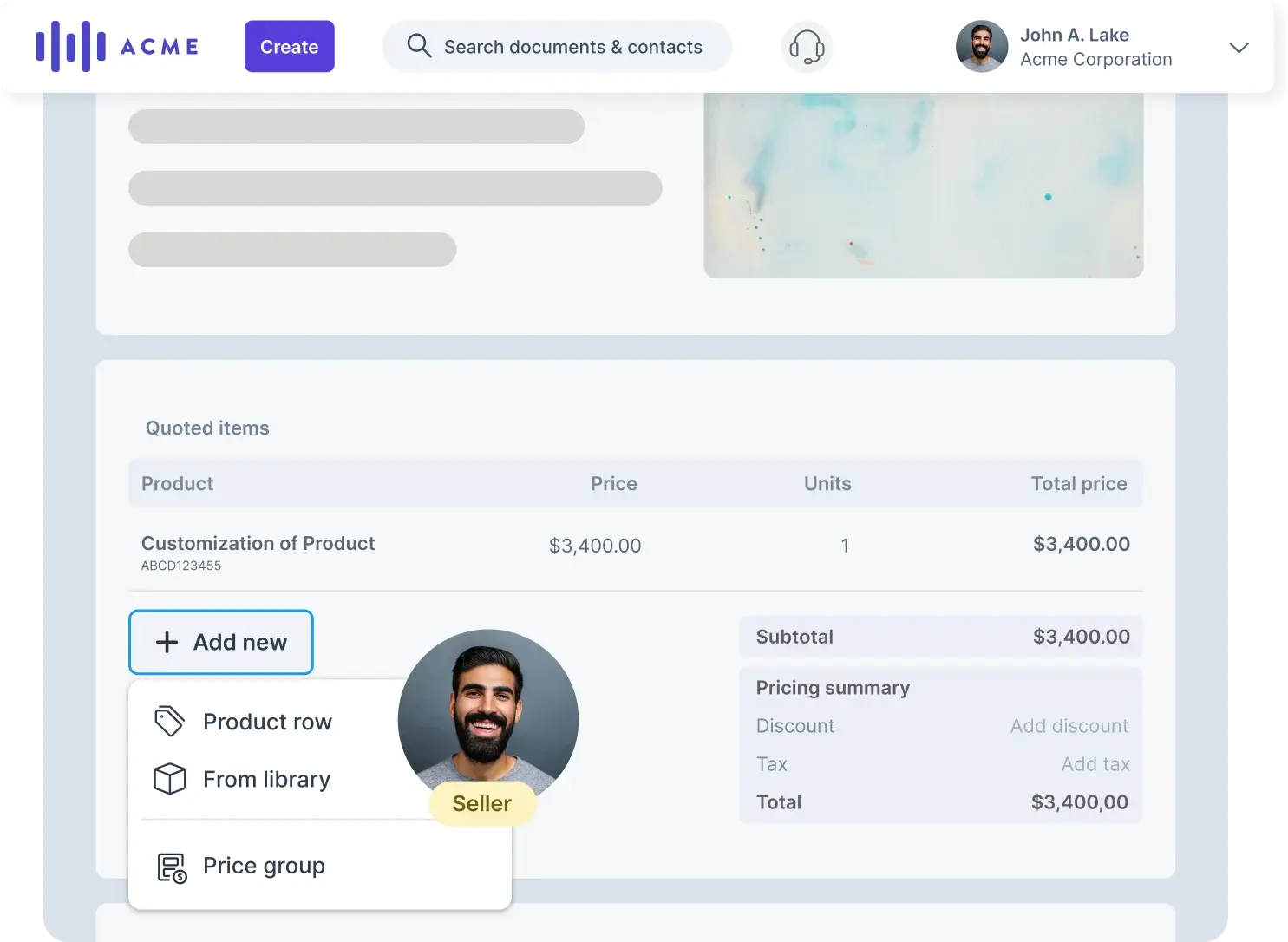
These dynamic environments support video messaging, in-document chat, mutual action plans, and analytics—all designed to drive buyer engagement and reduce deal friction.
It’s particularly effective for SaaS teams that want to tell stories, scaffold multi-stakeholder deals, and seamlessly align buyers and sellers in one space.
Best For
Revenue teams managing multi-stakeholder SaaS deals where buyer engagement, digital sales rooms, and analytics matter more than financing.
Key Features of GetAccept as Proposal Software
- Digital Sales Room: Host proposals in a collaborative space with video intros, chat, and embedded content to reduce buyer friction.
- Engagement Analytics: Track buyer activity (views, scroll depth, clicks) to enable intelligent follow-ups.
- CRM Integration & Automation: Integrates with Salesforce, HubSpot, and more to auto-generate and sync proposals.
- Content Library & Templates: Store and reuse pre-approved templates and assets for speed and consistency.
- Mutual Action Plans: Share structured timelines visible to both buyer and seller for clearer deal progress.
Customer Success Stories of GetAccept as Proposal Software
- Dealfront cut sales cycles from 150 days to 50 days, and reduced manual back-and-forth by 75% using GetAccept’s digital sales rooms and mutual action plans.
Key Limitations of GetAccept as Proposal Software
- Lacks embedded financing or quote-to-cash capabilities like BNPL or instant seller payouts.
- Template customization can be limited for highly tailored documents.
- Higher-tier features require per-seat pricing and annual contracts, making it less flexible for smaller teams.
Pricing of GetAccept as Proposal Software
- eSign Plan: ~$25/user/month – for basic e-signatures.
- Professional Plan: ~$79/user/month – adds sales rooms, unlimited signatures, CRM integration, and branding.
- Enterprise Plan: Custom – adds advanced team collaboration features.
Demo/Trial of GetAccept as Proposal Software
A 14-day free trial is available, and a live demo can be scheduled on request.
Before we wrap—here’s the bottom line. Each of the tools we’ve covered brings something valuable to the table, whether it’s document design, eSignatures, or buyer engagement.
But if you’re a SaaS team focused on faster deal cycles, cash acceleration, and scaling without friction, only one proposal software i.e., Ratio Boost purpose-built for that entire journey.
Final Take: Ratio Boost Is the Proposal Software SaaS Teams Actually Need
MarketJoy, a B2B lead generation provider, often saw deals stall after the proposal stage—not because of interest, but because rigid upfront payments clashed with buyer budgets. Sales cycles dragged, even when the value was clear.
By embedding Ratio Boost into their proposal flow, MarketJoy lets buyers choose flexible payment terms (monthly, quarterly, deferred) right at the quote—and still get paid upfront. This eliminated procurement bottlenecks and cash delays without discounting or chasing invoices.
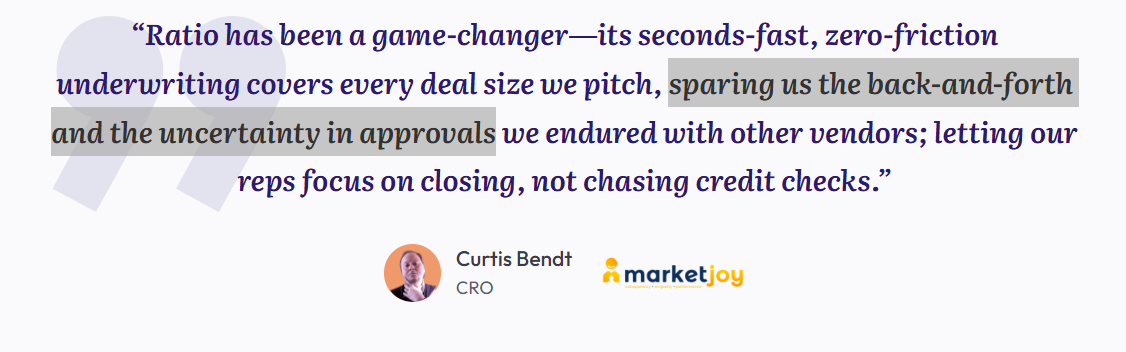
The result: faster closes, upfront revenue, and a streamlined deal process from quote to cash.
The Takeaway for SaaS Teams
If your proposals are getting sent (but not signed) Ratio Boost helps remove the real friction: payment terms and approval lag.
- Turn static quotes into buyer-ready checkouts with flexible terms.
- Get paid upfront even when buyers pay over time.
- Avoid discounts and collections by embedding financing in your proposal stack.
See how Ratio Boost can turn every proposal into revenue. [Request a demo today]
FAQs
1. How Long Does It Take to Fully Launch a Proposal System Like Ratio Boost?
Implementation timelines vary with complexity, but enterprise-grade platforms vary case by case, but typically can take 4-6 weeks to set up; this includes designing templates, mapping integrations, and onboarding users. Ratio Boost’s seamless CRM and billing integrations could accelerate that timeline further, especially for teams already using Salesforce or Stripe.
2. Can Proposal Software Adapt Mid-Deal If the Buyer’s Conditions Change?
Dynamic deal structuring—like adjusting pricing, duration, or payment terms in real time—is a standout feature of modern platforms (especially Ratio Boost), but not all tools support it natively. Ensure your chosen platform offers real-time flexibility, or you risk re-introducing friction during negotiation.
3. What Level of Internal Alignment Is Required Before Rollout?
Because tools like Ratio Boost shift payment terms and embed financing, alignment across Sales, Finance, and RevOps is critical—especially around who absorbs financing costs and approval workflows. Without it, powerful capabilities can become bottlenecks rather than accelerators.
4. What Integrations Are Truly Non‑Negotiable?
Critical integrations include CRM (e.g., Salesforce, HubSpot), billing platforms (Stripe, Chargebee), and erosion-free accounting tools (NetSuite). Without them, teams must rely on middleware or manual syncing—introducing risk and delay.
↗
The Closing Motion Platform
Sellers on Ratio see up to 30% higher close rates and 25% higher ACV.


