B2B SaaS Lending Platforms: Which One Fits Your Stage (And Why the Cash Gap Keeps Coming Back)
Every B2B SaaS lending platform solves a different problem for a different stage: fast advances against recurring revenue if you're early, larger credit lines if you're scaling, a card-processor loan if you already run payments through Stripe. This guide matches Capchase, Founderpath, Lighter Capital, SaaS Capital, and Stripe Capital to the company each one fits, then looks at the part lending alone doesn't touch: the gap between a buyer's yes and cash in the bank.


Table of contents

The right B2B SaaS lending platform depends on your stage: a fast advance against recurring revenue if you're early, a committed credit line if you're scaling, a card-processor loan if you already run payments through Stripe. This guide matches Capchase, Founderpath, Lighter Capital, SaaS Capital, and Stripe Capital to the stage each one fits. But most platforms on this list fund revenue you've already signed or earned, so they don't touch the moment a buyer negotiates payment terms. Ratio's 2026 State of the Closing Motion survey found 99% of SaaS leaders had payment terms shape a deal in the last 90 days and 17% lost a deal over them, which is why the cash flow problem starts before financing ever enters the picture. That's the part a Closing Motion Platform like Ratio is built to fix, with underwriting of the buyer at the point of sale.
The Challenge: Your rep closed the deal on Friday. By the following Friday, you're shopping for a lender to cover a gap that never needed to exist.
Signed doesn't mean paid, and most B2B SaaS teams learn that the hard way.
Think about the last time a buyer said yes and then asked to pay monthly instead of annually. Your rep had no playbook for that conversation except "let me check." Sometimes the answer came back in time. Sometimes the buyer cooled off, or the rep reached for a discount to keep the deal alive. Either way, finance ended up looking at a signed contract and a bank balance that didn't match, and the next call was to a lender.
That's a reasonable call, and there are good platforms for it. If you want a wider look at the category first, our guide to choosing a B2B SaaS lending platform walks through the evaluation criteria, including cost, funding speed, and underwriting. This guide sorts the main B2B SaaS lending options by the stage of company each one fits, so you can skip the ones that aren't built for you.
We'll also be straight about what lending alone doesn't touch: the stretch between a buyer's yes and cash in the bank, which we call the closing motion. It runs through the proposal, the payment terms, the signature, billing, and collections, and in most companies it's spread across several disconnected tools.
Ratio's State of the Closing Motion 2026 survey of 400 US SaaS CEOs, CROs, CFOs, and revenue leaders found it takes an average of 14.7 days after signature for a deal to turn into cash. Request the full report for the complete data set.
Start With the Stage You're In
Lending platforms for SaaS aren't interchangeable. They differ on who they'll lend to, how repayment works, and how much they expect to see in ARR before they'll talk to you. Match the platform to your stage first, then compare terms.
Early Stage: Fast Capital Against Recurring Revenue
If you're early, growing, and need working capital quickly without giving up equity, the platforms built around advances against recurring revenue are the natural fit.
Founderpath offers revenue-based financing with a discount rate that starts at 7%, disclosed in full on the term sheet before you accept, and states that funds typically arrive within 24 hours of accepting.
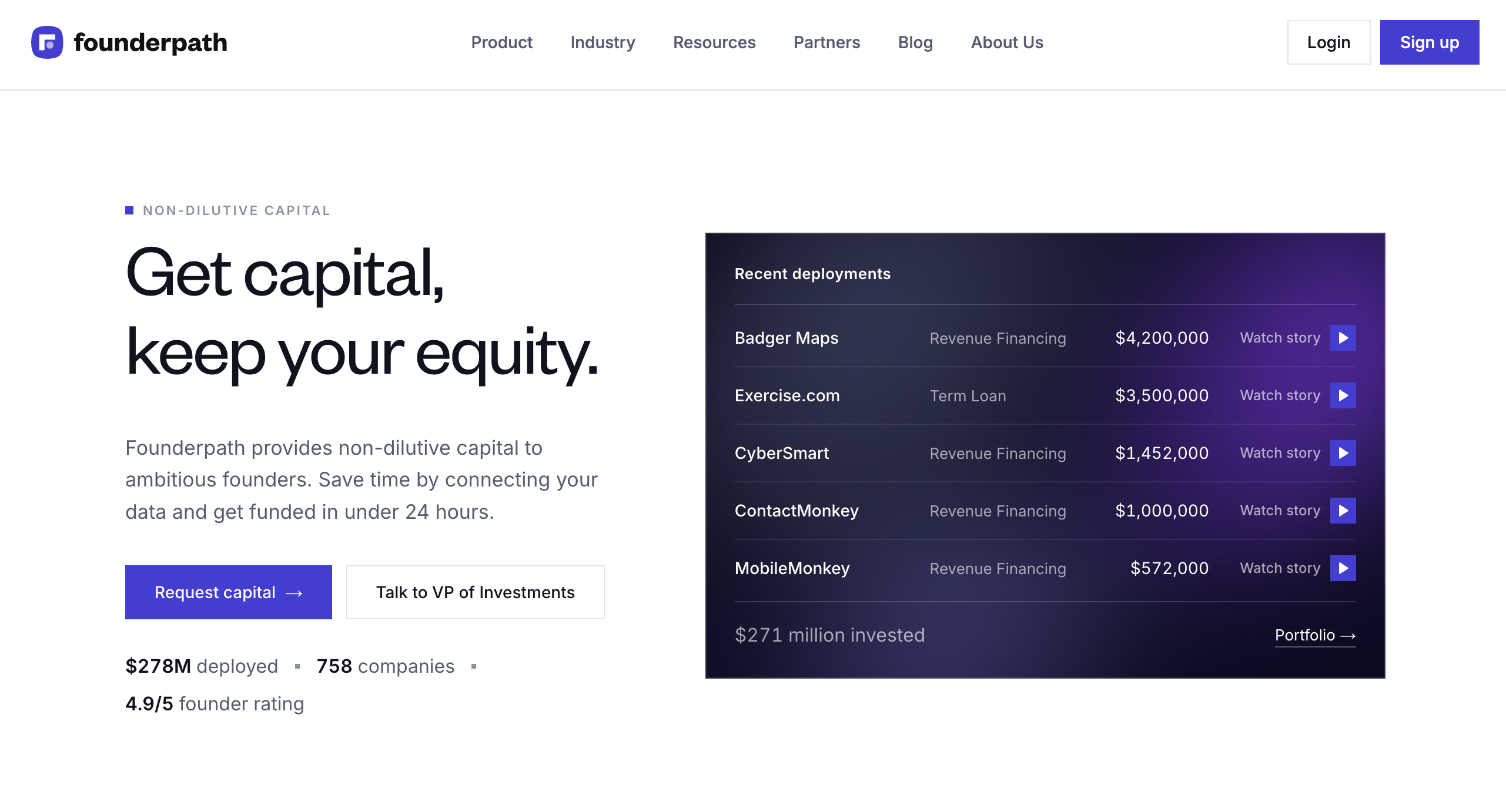
It says you keep 100% of your equity, with no board seats or warrants, and that there's no full personal guarantee, only a lien on business assets.
Lighter Capital is built for technology and SaaS startups with steady recurring revenue, and its FAQ states a minimum of $200K in ARR or $15K in MRR.
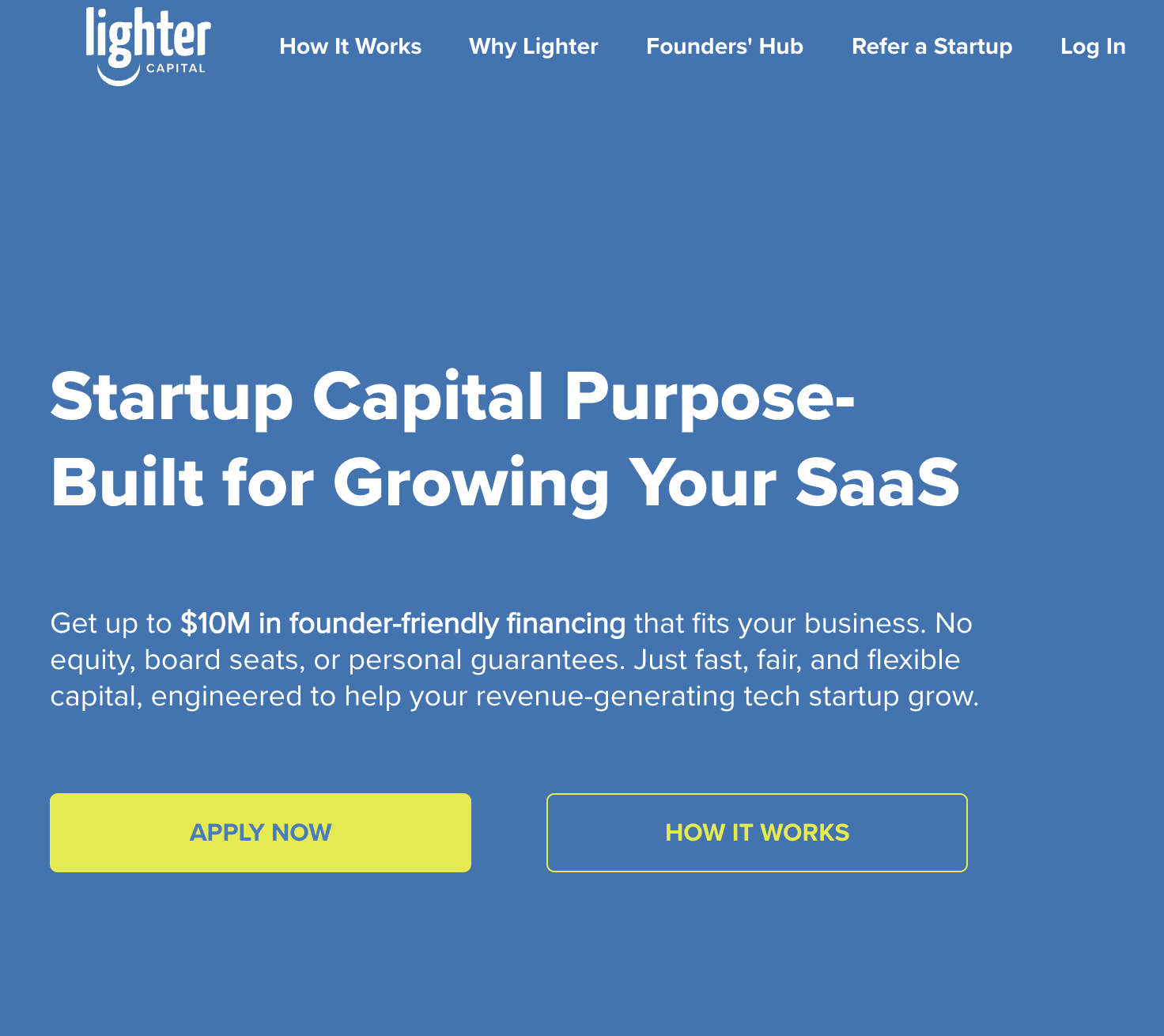
It says it never takes equity, board seats, or control, and lists payback terms of up to four years.
Scaling: Larger Lines and Longer Commitments
Once ARR is meaningful and you want more room, the options shift toward bigger, longer facilities.
SaaS Capital funds scale-up SaaS and subscription AI application companies with $3 million or more in ARR, through an MRR line of credit it describes as having few covenants, and says the typical time from first contact to funding is about five weeks.
You don't need to be profitable or venture-backed, but you do need a solid history of retention.
Already Running Payments on Stripe
Stripe Capital is the lowest-friction option if you already process payments through Stripe.
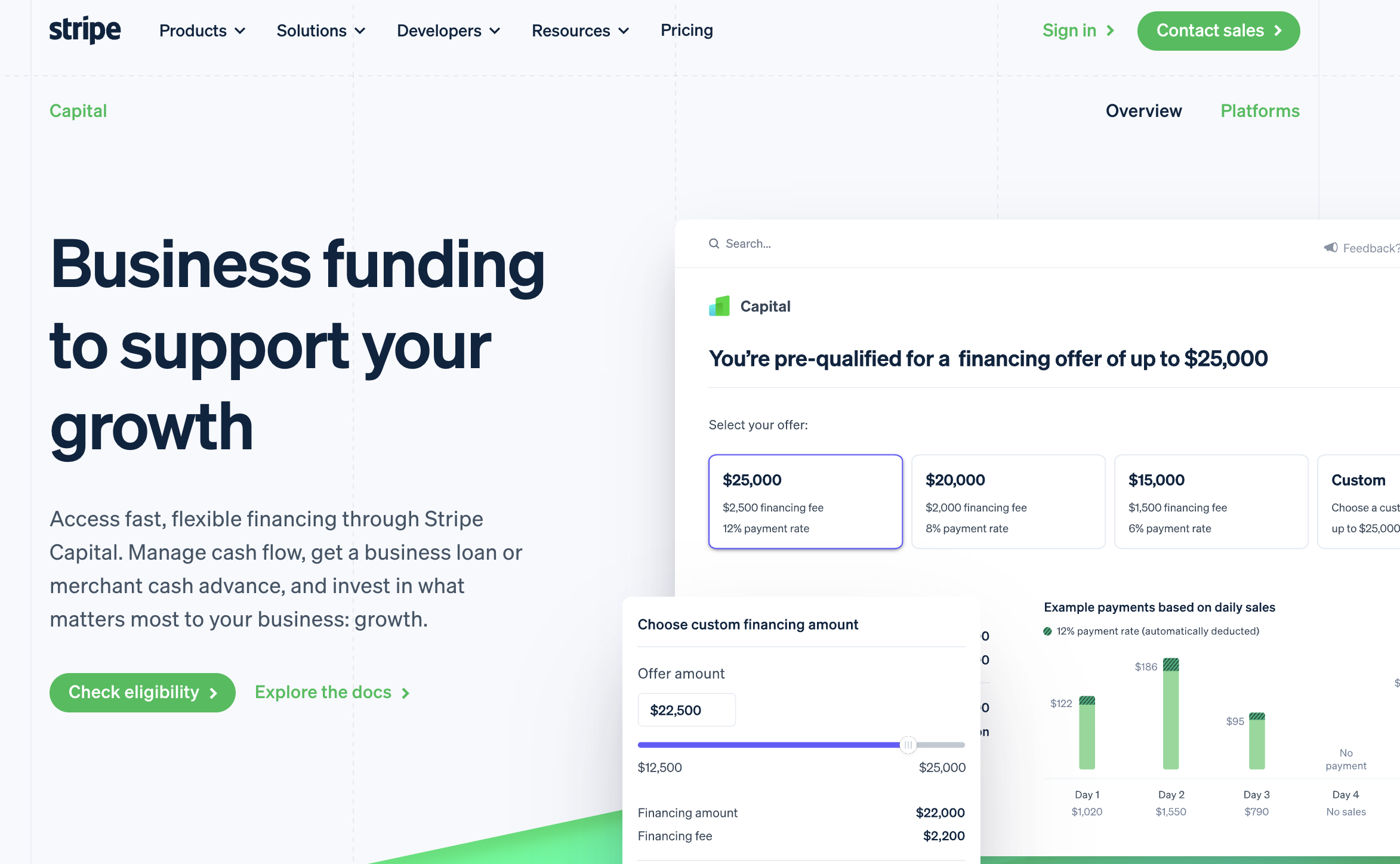
Offers are based on your payment volume and history there, you pay one flat fee that doesn't change rather than compounding interest, and repayment is a fixed percentage of your daily sales, with funds typically deposited the next business day.
Stripe's own examples show amounts in the $15,000 to $25,000 range, so check that the amounts fit what you need.
Vendor Financing at the Point of Sale
Capchase is the one platform here built around financing for buyers rather than funding against the seller's own revenue.
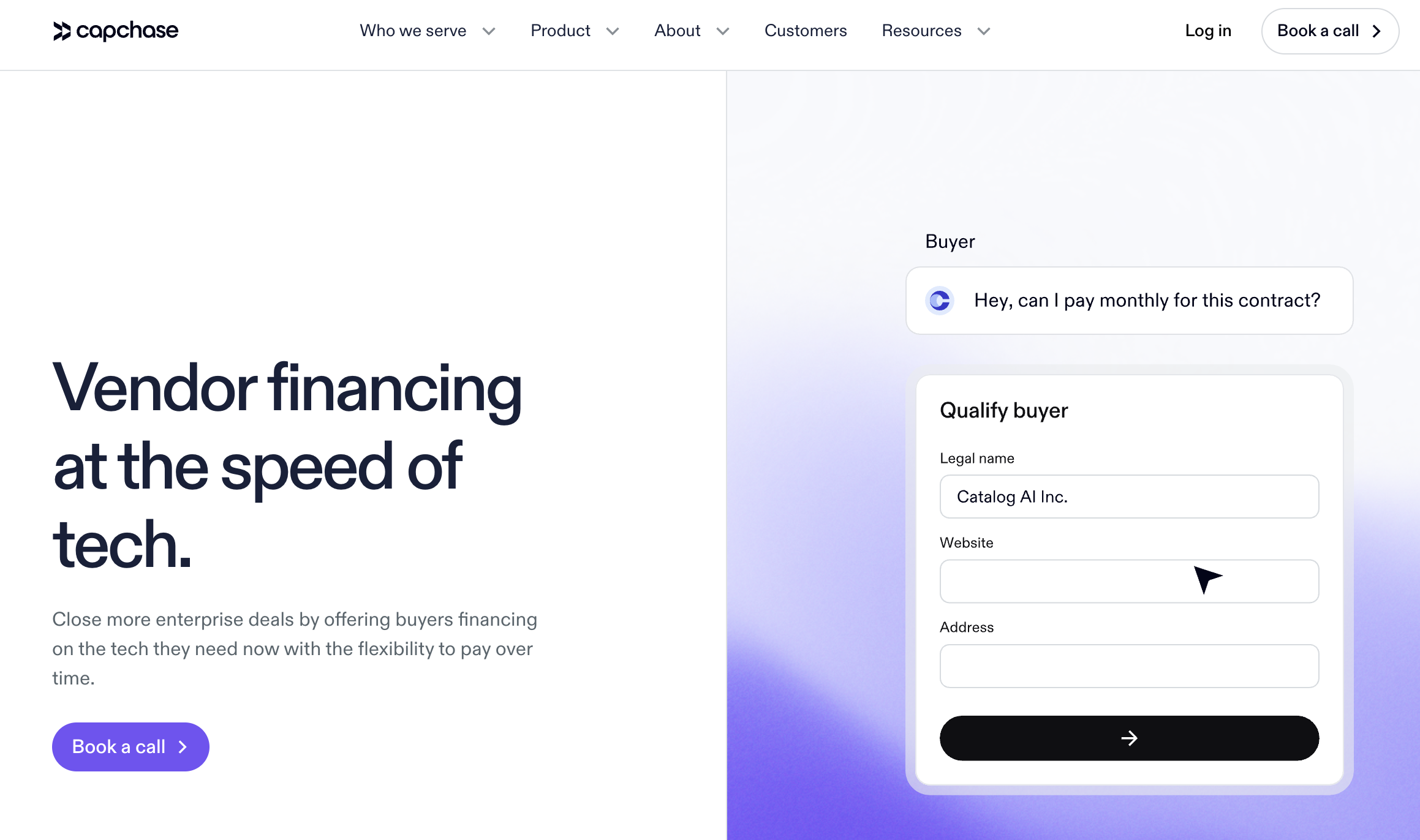
Its homepage describes vendor financing for B2B software buyers, with flexible loan terms and installment payments to fit their budget constraints. That puts it closer to the point of sale than the other lenders on this list, and it suits sellers whose buyers keep asking to pay over time.
If you're weighing it, ask how Capchase underwrites and whether the financing sits inside your own proposal and billing flow. Those two answers decide how much of the buyer's yes it can actually help with.
What All of These Have in Common
Most platforms above do one job well: they give you cash against revenue you've already earned or are about to earn. That's useful. But look at where most of them sit in the deal cycle. Founderpath, Lighter Capital, SaaS Capital, and Stripe Capital fund against revenue that is already contracted or on the books. Capchase is the closest exception, because its vendor financing sits at the point of sale.
Funding against existing revenue doesn't touch the moment that decides whether the cash shows up on time at all: the point where a buyer asks to pay monthly, a rep needs an answer, and a deal either closes cleanly or doesn't. In Ratio's survey of 400 SaaS leaders, 99% had payment terms affect the outcome of a deal in the last 90 days, and 17% have lost a deal outright over a payment-term conflict. A lender can't give those deals back. And because the same fragmented process repeats on the next deal, you end up borrowing against the same gap every quarter.
Side by Side: Where Ratio Fits
Here's how Ratio and the five lenders compare on the things that actually separate them: what gets funded, when it comes into play, and who gets underwritten. We've left cost out on purpose, because a flat fee, a discount rate, a revenue-based facility, and a line of credit aren't comparable on a single number.
The pattern is the point. The lenders fund your company against revenue it already has. Ratio sits at the point of sale and pays you the contract value upfront, which is why it can run alongside any of them.
The Closing Motion Platform: What It Looks Like in Practice
The closing motion is everything between a buyer's yes and cash in the bank: the proposal, the payment terms, the signature, the cash upfront, billing, collections, and renewals. A Closing Motion Platform runs that whole path as one continuous flow, so payment terms are set on the same platform that built the proposal, the signature triggers the cash, and billing and renewals pick up from there without a re-key or an export.
That's what Ratio is.
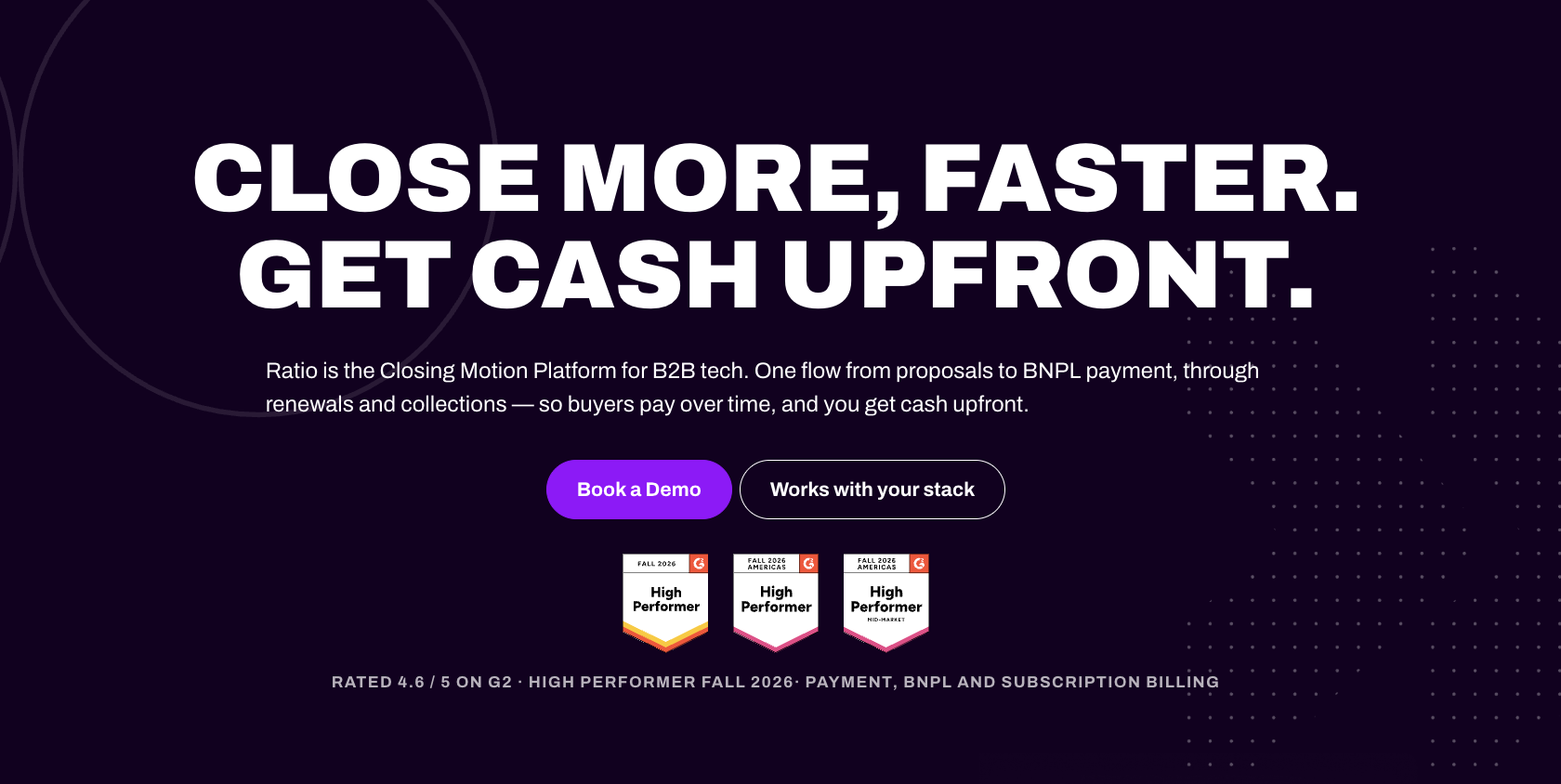
Ratio embeds flexible payment options directly into the proposal, so a buyer can pay monthly while you collect the contract value upfront, underwritten by Ratio at the point of sale. It also converts contracts that are already signed into cash. The rep has an answer in the room, finance has the money at signature, and nobody has to go shopping for outside financing to cover the difference. See how Ratio works.
DearDoc is a good example of what that looks like in a real sales motion. DearDoc sells software to medical practices, and practices strongly prefer to pay monthly or quarterly, while DearDoc needed the cash flow that annual, upfront contracts provide. That used to mean choosing between winning the deal on the buyer's terms and protecting the company's cash position.
With Ratio, practices got the payment schedule they wanted, and DearDoc received the contract value upfront. A loan can't produce that outcome, because a loan doesn't change what happens at the moment of yes. Read the DearDoc story.
How to Decide
If you need working capital now and your contracts aren't the bottleneck, start with the platform that matches your stage above, and use the side-by-side to see which row matches your problem. If you're closing deals but losing some of them, or waiting weeks on cash that should have landed at signature, a loan will cover the gap without closing it. Ratio is the fix, and it works alongside outside financing if you still want it for growth capital.
Here's the question we'd put to your sales and finance leads this week: how many deals did we discount, delay, or lose last quarter over payment terms, and what would that revenue look like if we'd said yes on the buyer's terms and still collected upfront? Curious what number you land on.
Book a demo to see where your own close stacks up.
Frequently Asked Questions
Which B2B SaaS lending platform is best for an early-stage company?
Platforms like Founderpath and Lighter Capital are built for early companies with steady recurring revenue who want fast capital without giving up equity. SaaS Capital states a $3 million ARR minimum, which most early companies won't meet yet.
Can Ratio work alongside a lending platform?
Yes. The platforms above fund your company against revenue it already has, while Ratio sits at the point of sale, embeds payment flexibility into the proposal, and pays you the contract value upfront. They solve different problems, so one doesn't rule out the other. If you still want growth capital, outside financing can run alongside Ratio.
Will financing hurt my margins the way discounting does?
A discount permanently lowers the price. Financing changes when you're paid, not the contract price. Whether it changes what you net depends on who pays the financing fee, so ask any provider, including us, who bears it and how much before you sign.
How current is the information on these platforms?
Terms, minimums, and fees change often, and some providers quote rates per application rather than publishing them. Confirm current terms directly on each provider's site, linked above, before deciding.
Disclaimer: All information about third-party platforms in this post is based on publicly available content from each provider’s website as of October 2026. Eligibility, rates, fees, and terms vary by applicant and change often, so confirm current details directly with each provider before deciding. This post is for general informational purposes only and is not financial or legal advice. Ratio is not affiliated with the companies named here. See our Terms of Service.
↗
The Closing Motion Platform
Sellers on Ratio see up to 30% higher close rates and 25% higher ACV.


